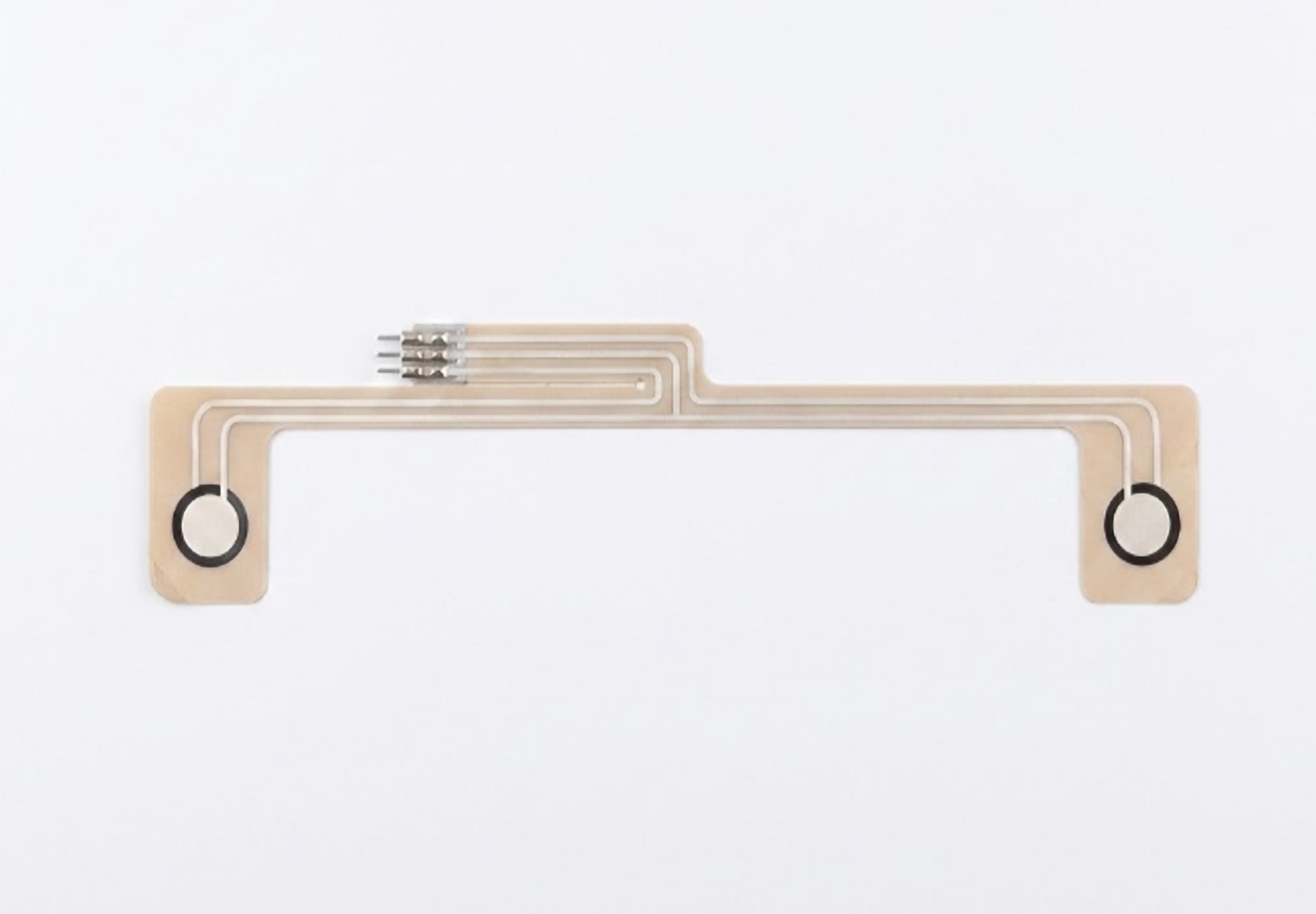
What Is an FSR Pressure Sensor?
An FSR (Force Sensing Resistor) is a sensor that converts applied mechanical force into a measurable electrical signal. Baoshengda’s thin film FSR sensors use semi-conductive materials with resistance decreasing under pressure, enabling tactile and force measurement in compact electronic structures.
FSR sensors are useful when the product needs pressure detection, relative force feedback or threshold sensing instead of only a simple on-off switch signal. The final response depends on the sensor structure, actuator, housing, adhesive, reading circuit and calibration method.
FSR Sensor Structure
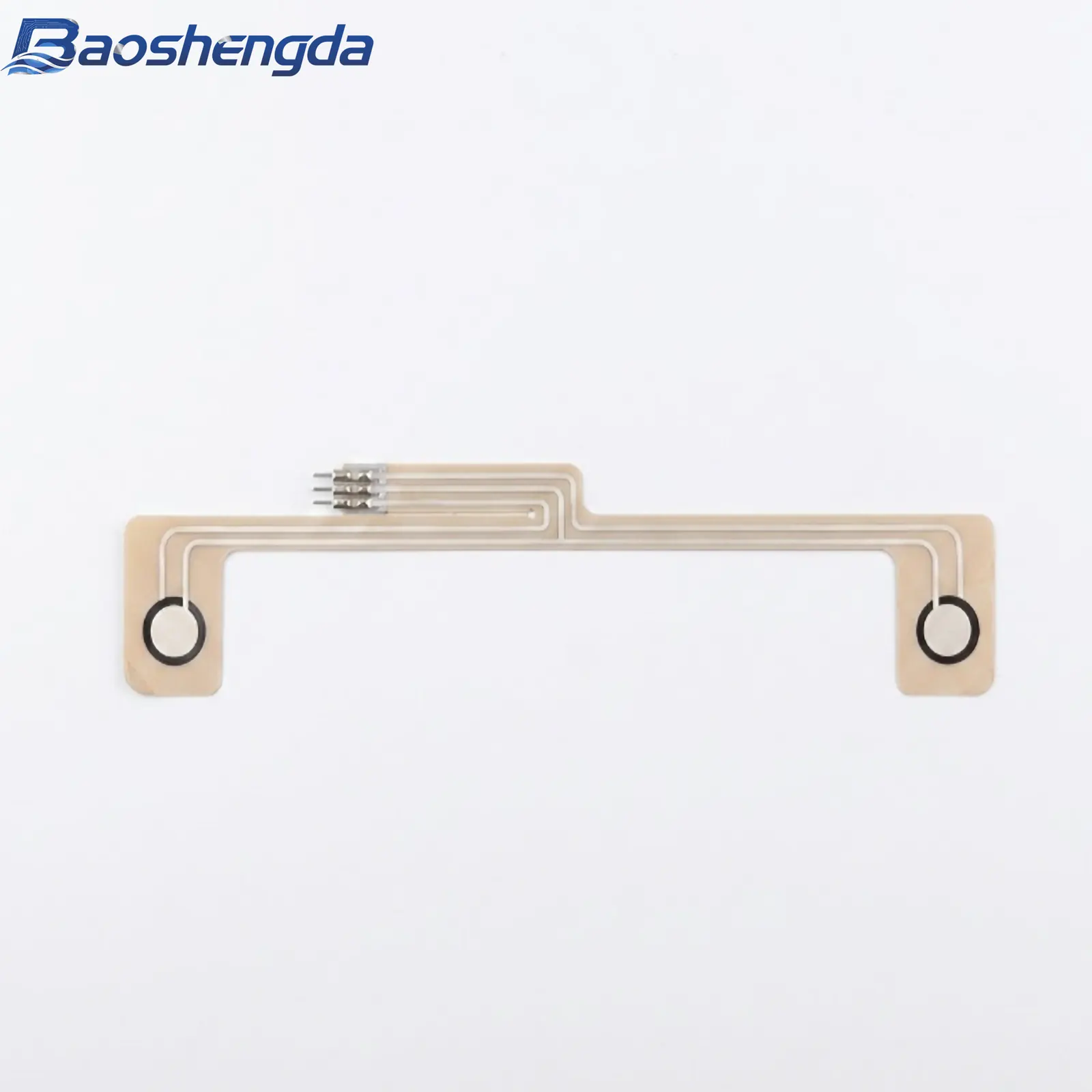
Top SubstratePET / PI, 0.05mm or customer-specific material available based on project requirements.
Conductive ElectrodesSilver or carbon ink printed to form the electrical path and connection interface.
Pressure Sensitive LayerPiezoresistive coating designed to change resistance under applied pressure.
Bottom SubstrateCan be paired with 3M adhesive or customized bonding layer for the product housing.
Connector / TailCustomized for PCB, FPC, ZIF, pin or customer-specific electronic interface.
Technical Specifications
ItemOptions / Description
Product TypeFSR Pressure Sensor, Thin Film Force Sensor, Flexible Pressure Sensor
Thickness0.1mm - available based on project requirements
SensitivitySupports 10g - 50kg force range, highly responsive
FlexibilityUltra-thin, bendable, adaptable to complex surfaces
ResistanceAdjustable per design; single key multi-function possible
InterferenceAnti-EMI, stable output in harsh environments
CustomizationShape, point array, connector interface fully customizable
Adhesive3M or customer-specified adhesive solution
ApplicationsSmart wearables, medical rehab, industrial control, automotive seating, 3C electronics
CertificationISO 9001, IATF 16949, ISO 14001; RoHS / SGS support
Final specifications depend on product structure, sensing area, force target, material selection, application environment and customer design requirements.
Customization Options
Graphic and Mechanical
- Any shape or size
- Point array density customizable
- Housing interface integration
Electrical and Functional
- Single or multi-key functionality
- Connector type and tail direction
- EMI shielding if required
Environmental
- Waterproof, dustproof, chemical resistant
- High/low temperature tolerance
- Outdoor or harsh environment adaptation
Integration Support
- Membrane switch integration
- Graphic overlay assembly
- Adhesive and enclosure fit review
What Buyers Should Define Before FSR Sampling
A useful FSR sample request should define the force range, actuator contact area, sensor position, tail route, reading circuit and acceptance test. The printed sensor can be adjusted, but repeatable results depend on the mechanical stack above the film and the way the circuit reads resistance change.
DecisionWhat to confirm before RFQ
Force rangeLowest detectable force, normal operating force, overload condition and whether the signal is threshold-based or calibrated.
ActuatorMaterial, shape, travel, contact patch and whether pressure may land off-center during real use.
Active areaSensing-zone size, keep-out area, screw or rib clearance, and how much tolerance margin the housing needs.
Tail routingExit direction, bend radius, connector pitch, strain relief and whether the tail crosses a moving or sealed area.
CalibrationTest points, fixture method, firmware threshold and whether production inspection needs a written response check.
A common sample-stage risk is testing the bare FSR by finger, then finding a different response after the sensor is installed under a rubber pad, molded actuator or housing rib.
Force Range, Actuator and Calibration Tradeoffs
- A small hard actuator can create a strong local response but may require tighter alignment control.
- A wider soft pad can feel smoother but may spread the force and reduce repeatability if travel is not controlled.
- A larger active area gives more placement tolerance but can make the signal less specific if the product has nearby ribs or support posts.
- A short tail can save space but may increase assembly stress if the connector position is not fixed early.
- Threshold detection usually needs a simpler data plan than force trend measurement or multi-point calibration.
- Environmental checks should match the real product, such as heat, humidity, cleaning, vibration or long press time.
Applications
FSR pressure sensors can be used in products that need thin, flexible force feedback or pressure-related input.
Medical Rehabilitation
Smart insoles, gait analysis, patient monitoring and anti-bedsores pressure detection.
Smart Wearables
Force feedback, activity tracking and pressure-sensitive controls.
Automotive
Seat and steering force sensing, haptic feedback and in-vehicle controls.
Industrial
Control panels, measurement devices and machine operator interfaces.
Consumer Electronics
Handheld devices, smart appliances and compact HMI panels.
Why Choose Baoshengda?
Manufacturing Roots Dating to 1989The production history began in 1989; Baoshengda became the independent company in 2007 and continues to manufacture HMI components, functional film products and custom interface parts.
Fully Integrated Custom Design and ProductionSupport from drawing review and sample making to production process planning.
Certified Quality SystemISO 9001, IATF 16949 and ISO 14001 certified manufacturing support.
Flexible Manufacturing for FSR and Membrane Switch IntegrationSupport for force sensing film, membrane switch assemblies, graphic overlays and connector-ready HMI modules.
Application-Focused Engineering ReviewReview of force target, housing stack, tail direction, point layout, adhesive and application environment before sampling.
Global Customer Support Across Multiple IndustriesProject support for medical rehabilitation, smart wearables, automotive, industrial control and consumer electronics.
Quality and Testing
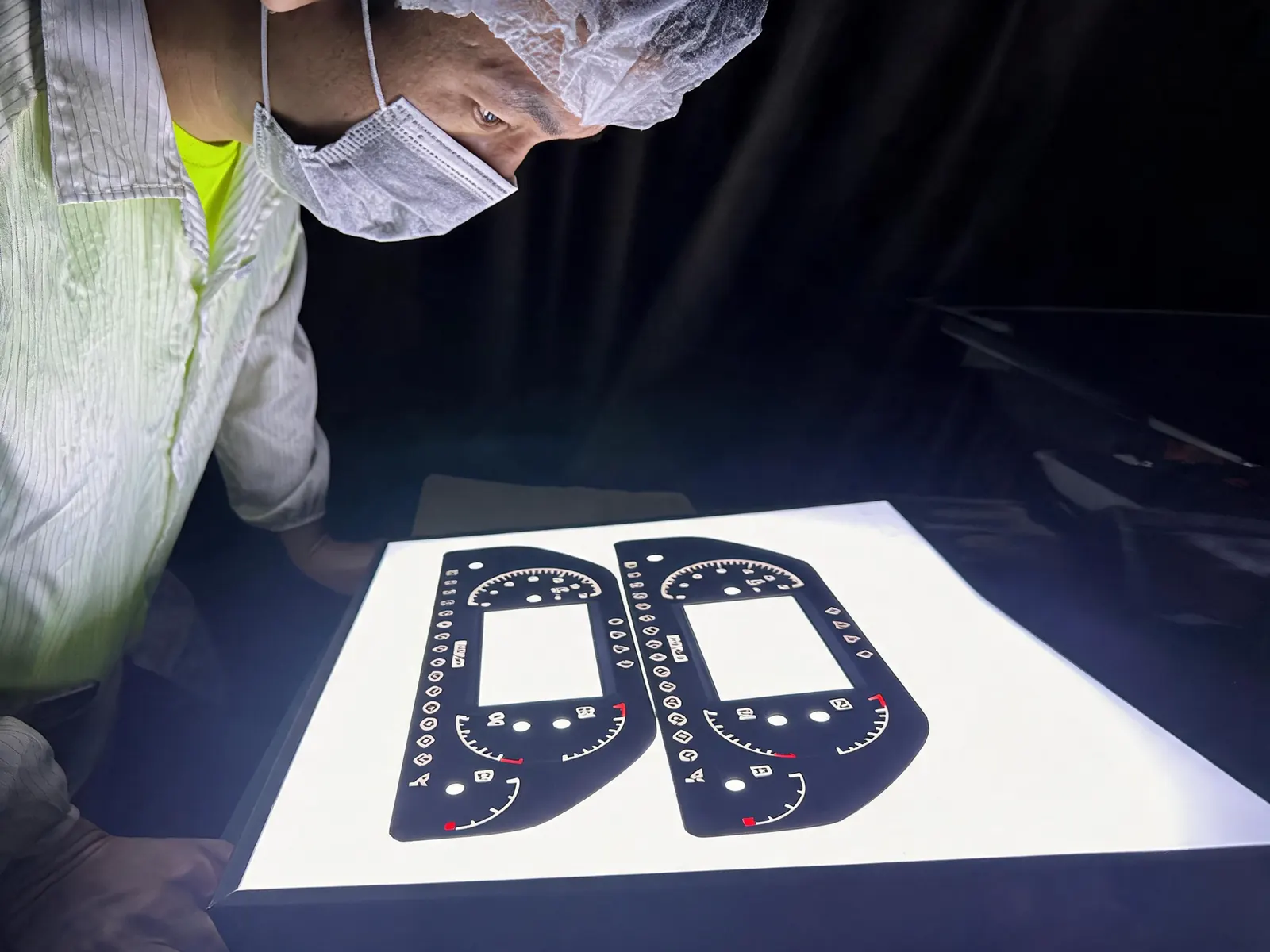
Inspection and testing support is available based on project requirements.
- Visual inspection
- Dimensional and tolerance check
- Electrical continuity and resistance testing
- Key functionality and durability testing
- Adhesion and bonding assessment
- Temperature, humidity, and salt spray evaluation
- RoHS / SGS material compliance support
Design Information Needed for Quotation
To help us provide a faster and more accurate quotation, please send the following information if available:
- 2D or 3D drawing
- Artwork and color requirements
- Key layout / functional requirements
- Target force range and whether the signal is threshold, trend or calibrated measurement
- Actuator material, contact area, travel and expected tolerance
- Connector type / tail
- Reading circuit, resistor values, ADC or firmware threshold if already defined
- Application environment
- Sample acceptance method, such as fixture test, assembled-product press test or cycling check
- Estimated quantity
- Sample or existing product reference
Download FSR Pressure Sensor Brochure
Get an overview of Baoshengda’s custom FSR pressure sensor structure, technical options, application scenarios, quality support and quotation requirements.
Download PDF Brochure
FAQ
What force range should buyers define before requesting FSR samples?
Buyers should define the lightest force that must be detected, the normal operating force, overload or abuse force, and whether the product needs threshold detection or calibrated relative measurement.
Why do actuator shape and contact area matter for an FSR sensor?
The actuator decides how force is applied to the sensing zone. A hard small pin, rubber dome, foam pad or wide plastic button can create different readings even when the same force is applied.
Can the FSR sensor be flexible?
Yes. The sensor can be designed as an ultra-thin flexible film, with thickness down to 0.1mm available based on project requirements, and can be suitable for curved surfaces.
Are the sensors waterproof?
They can be designed with a sealed structure. The final waterproof performance depends on the customer application, material selection, adhesive choice and assembly method.
What should be sent for FSR sensor quotation?
Helpful RFQ inputs include the sensor outline, active area, tail route, connector, actuator material and contact patch, target force range, circuit method, environment, sample quantity and acceptance test.
Can Baoshengda assist with design optimization?
Yes. Our engineers can review drawings, interface, point layout, environmental requirements, actuator conditions and functional design before sampling.
Buyer guide for long flexible pressure-strip prototypes
A long flexible strip should not hide contact sensing, bend recovery and alarm behavior inside one requirement. Use the long flexible pressure-strip prototype guide to define the active-zone map, mounted load path, baseline-return evidence, tail and connector before requesting samples.
Related FSR Buyer Guides
Map a wearable FSR contact stack to material and test-report evidence before sample approval
Compare loading, release and recovery before approving an FSR supplier transfer
Freeze the contact fixture before quoting an FSR for robotic connector assembly
Separate FSR contact evidence from robot grasp validation
Validate force mapping and actuator geometry before FSR sample approval
Diagnose smart-bedding sensor drift and tail strain after roll testing
Use these practical notes before sending a drawing or sample request.
Part of Baoshengda HMI system ecosystem
FSR pressure sensors are the sensing layer inside Baoshengda HMI system solutions. They can add force input, pressure detection or tactile response to a complete HMI panel assembly.
Need a custom FSR pressure sensor for your application?
Send us your drawing, sample, functional layout or application requirements. Baoshengda can help review the sensor structure, force range, connector interface and assembly method before sampling.