
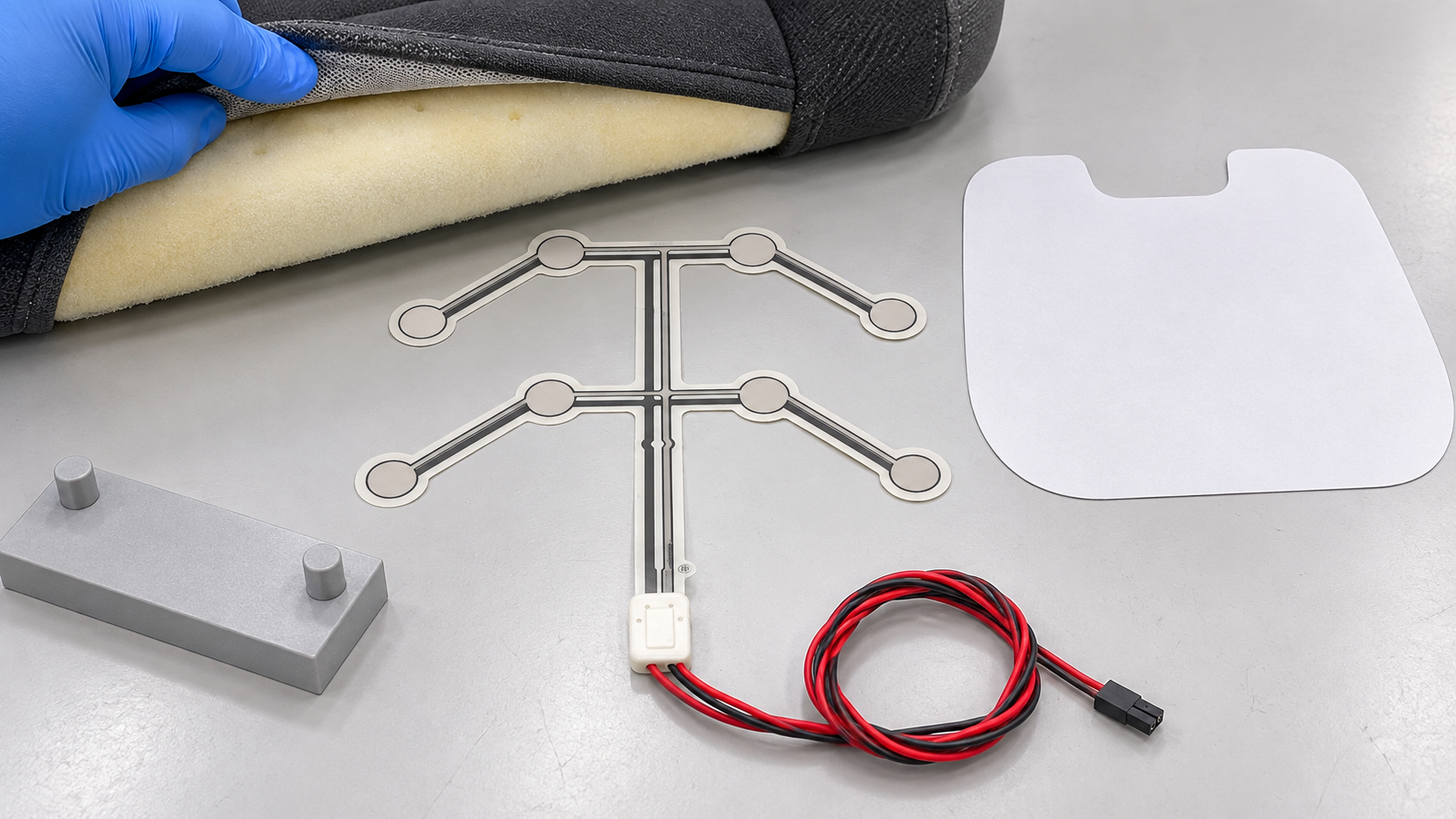
If an OEM is screening an alternate thin-film pressure sensor for a vehicle-seat program, do not begin by matching only a nominal force range or a loose resistance reading. First keep the sensing-zone map, cushion load path, tail exit and mating interface under control. Then compare samples with the same actuator, support, electronics and defined conditions. A flexible film can be a component candidate; it is not, by itself, an approved occupant-classification or restraint-safety replacement. An initial enquiry can start with an anonymized layout and intended use, while the vehicle-system owner separately defines safety requirements and validation.
A current seat-sensing signal is not a component approval
ZF LIFETEC's September 17, 2026 release describes an integrated approach in which cameras, seat sensors and seat-belt sensors contribute to occupant information used by restraint algorithms. That is a useful reminder that seat sensing is a system question, not evidence that a particular film sensor can be substituted. The announcement does not identify a Baoshengda component, disclose ZF's sensor construction or authorize any interchange.
The practical supplier question is narrower: if a buyer already has a flexible pressure element in a defined seat or seat-adjacent sensing position, what evidence makes an alternate component worth sampling? Baoshengda's FSR pressure-sensor product page publicly describes custom sensing-zone shape, point arrays, connector and tail options, and review of force, contact area, routing and readout. The first-party sample images used for this article visibly show a branched film array, printed traces and a cable transition. They prove a component form exists, not its calibration, vehicle fit, automotive program qualification or safety performance.
Compare the pressure zone in the actual load path
A drawing of only the film outline can hide the reason two suppliers' parts behave differently. Record where each active zone falls beneath the cushion, trim, foam and support; which face receives load; the area and compliance of the contacting feature; and what prevents a seam or ridge from concentrating force. Distinguish a proposed single threshold, a relative trend and a calibrated estimate, because they call for different evidence. No generic FSR force span proves that the proposed seat stack will produce a usable signal.
For a supplier-transfer sample, place the reference and alternate at the same intended depth and orientation in a representative, non-confidential bench stack. Use the same loading fixture and readout circuit; log both loading and unloading rather than one convenient point. If the foam, trim, backing or electronics changes, mark that as a separate experiment. A loose-film check can find an open circuit or gross response, but it cannot close an installed load-path decision. The buyer or system integrator sets the positions, loads, acceptance limits and whether this component class is even appropriate.
| Decision | Evidence for a useful comparison | What it does not settle |
|---|---|---|
| Sensing-zone geometry | Controlled outline, zone centers, orientation and reference-sample revision | Occupant classification across real seating postures |
| Mechanical stack | Foam, trim, backing and load-contact description or representative fixture | Full-vehicle durability or crash behavior |
| Electrical interface | Tail direction, conductor/contact side, pin map, mating connector and readout circuit | Software thresholds or restraint control |
| Sample response | Same fixture, load sequence, temperature and electronics for reference and alternate | Production release without system validation |
Treat the tail and connector as part of the comparison
A film sample can fit beneath the cushion yet fail at the exit. Show the tail path from the active zone to the first supported bend, the strain-relief method, available space near the seat frame, conductor side and mating orientation. State whether a cable transition is part of the supplied sensor assembly or a buyer-owned harness. Keep the original mating drawing, pin-one view and an approved physical reference separate from a photograph, which may reverse left and right.
The sample image shows a white transition and red/black lead ending in a small plug; it does not prove that the plug is suitable for a buyer's seat harness. Confirm connector family, retention, circuit polarity if relevant and the actual input design before using a visually similar substitute. Record continuity and response through the specified bend and installation route in the buyer's sample plan. Do not infer a durability rating or electrical compatibility from an attractive photo.
Start the enquiry without pretending it is production release
An initial enquiry needs the proposed function, approximate available envelope, whether the film is an exploratory or replacement candidate, a rough zone sketch and the desired tail direction. It can omit confidential occupant data and a final vehicle drawing. Baoshengda can review whether a custom FSR film and tail construction is within the product family and identify missing component inputs. That discussion is not a feasibility guarantee.
For an indicative quotation, add the reference revision, zone count and dimensions, substrate or adhesive expectations, tail/connector scope, anticipated sample quantity and the buyer-defined evidence to be supplied. Treat unconfirmed load range, mating part and fixture design as quotation assumptions, not silently approved specifications. A sample order should name the common readout, actuator and test sequence so differences are attributable.
Production release is later and separate. The OEM or appointed system owner must approve the full sensing and restraint architecture, applicable safety process, electronics and software thresholds, environmental and lifecycle validation, traceability and final drawing. A component maker can manufacture to an agreed released design and provide agreed component-level records; it cannot certify an occupant-safety function by supplying a film sample. If those responsibilities are still open, ask for a scoped comparison sample rather than a replacement approval.
A compact next step for the buyer
Send one anonymized zone sketch, an existing reference sample if sharing is authorized, the tail/connector view and a short description of the cushion-side load path through the Request Quote page. Ask for a component-scope review and identify the assumptions that would need a controlled sample. Keep confidential vehicle drawings, personal occupant information and safety sign-off outside the public enquiry. This produces a useful supplier conversation while preserving the distinction between film geometry, comparative evidence and the OEM's final system decision.
Need help reviewing a structure?
Send your drawing, photos, application, and quantity. Baoshengda can help check the structure before sampling.
Send Drawing for Quote