
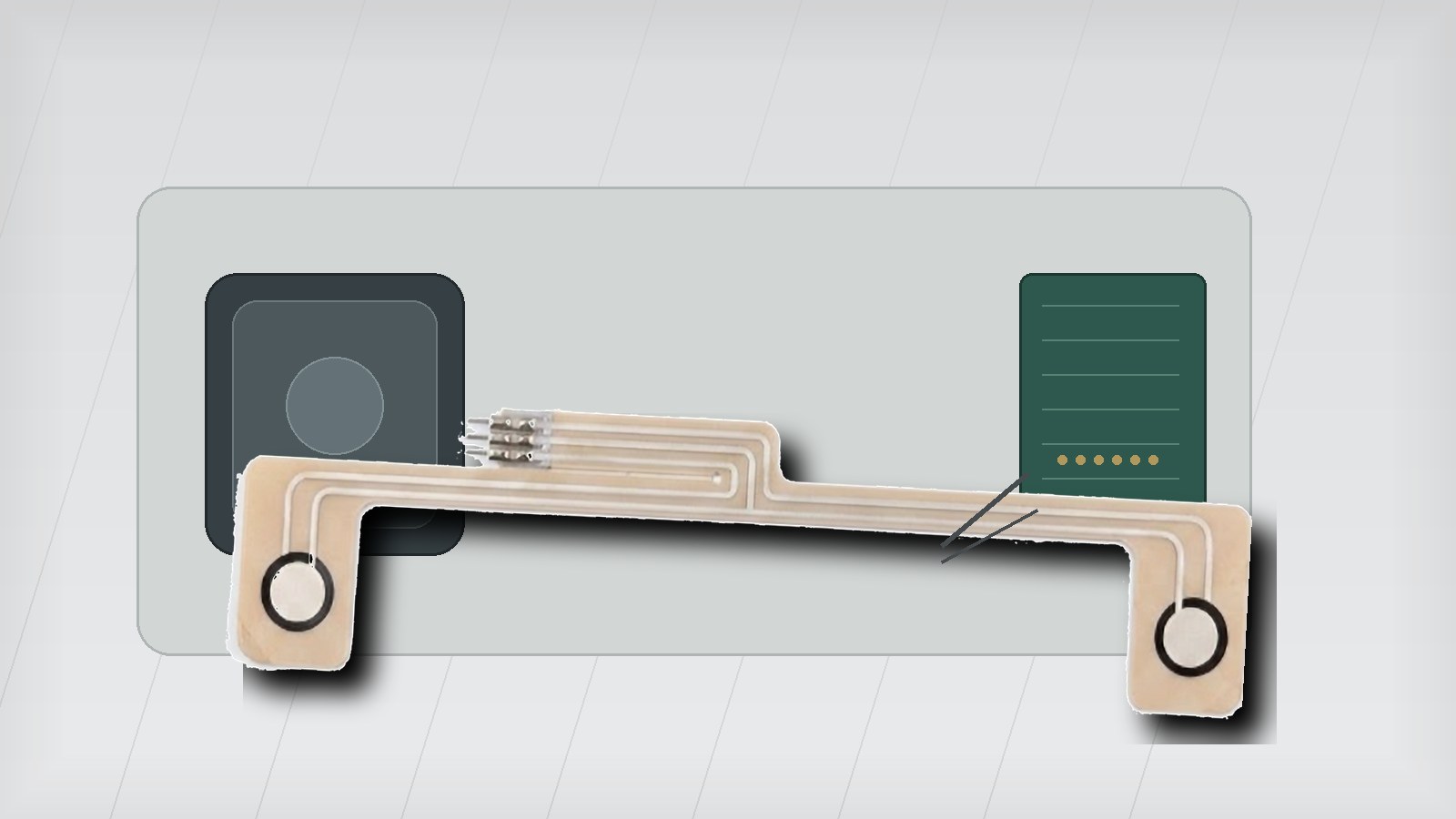
An FSR pressure sensor sample should not be judged only by whether resistance changes under a finger press. The safer question is whether the sensor still gives a usable signal after the tail is bent, the connector is fixed, the actuator is installed, and the readout circuit is placed inside the final product.
For custom thin-film force sensing projects, buyers should review the mechanical route and electrical reading together. Baoshengda's FSR pressure sensor work usually starts with sensor outline, active area, tail route, connector plan, actuator details, and the target reading method.
What should be checked before the sensor shape is frozen?
Start with the installed path. The active area may be simple, but the tail route often decides whether the sample can be mounted without stress.
Check these points before sample quotation:
- Where the force enters the sensor and whether it is centered on the active area.
- How the tail leaves the pressure point without being pinched by the housing.
- Whether the tail bend has enough radius and does not fold at the conductive trace.
- Where the connector or solder pads sit relative to the PCB.
- Whether screws, ribs, clips, gasket lines, or rubber pads create preload.
- Whether assembly workers can install the part without pulling the tail.
A common sample-stage failure is approving a flat drawing that works on a bench but cannot be routed inside the real enclosure. If the tail must turn immediately after the sensing area, discuss bend direction, stiffener length, and keep-out zones before tooling.
Why readout stability depends on the full stack
An FSR changes resistance under pressure, but the final signal depends on more than the film pattern. The rubber pad, plastic actuator, spacer, adhesive, PCB circuit, firmware threshold, and housing tolerance all affect the reading.
The buyer should define the target reading type early:
- A simple threshold input for press or no press.
- A low, medium, high force trend for user interface control.
- A relative pressure signal for grip, seat, handle, or wearable contact.
- A production check with a fixed test force and pass or fail range.
The tradeoff is sensitivity versus noise margin. A sensitive stack may detect light force, but it may also react to vibration, foam compression, or assembly preload. A less sensitive stack may be steadier after installation, but the user may need a firmer press.
What actuator and housing details change the result?
The same sensor can behave differently under a rubber dome, molded post, foam pad, silicone sheet, metal plunger, or flexible cover. The contact patch and travel path decide how the load reaches the active area.
Before ordering samples, send or confirm:
- Actuator material, hardness, end shape, and expected travel.
- Contact patch size and whether the press can move off center.
- Stack layers above the sensor, including rubber, foam, overlay, spacer, and adhesive.
- Housing flatness and any raised ribs near the sensing area.
- Whether the sensor is bonded fully, bonded only around the edge, or held by compression.
- Whether the part must survive repeated long presses or only short touches.
One useful check is to compare bare-sensor behavior with installed behavior. If the installed reading is already high before the user presses, the stack may have preload. If the reading changes when the tail is moved, the routing or connector fixation needs review.
What circuit information should be shared with the supplier?
Two customers can test the same FSR and get different data if the readout circuits are different. The supplier does not need the full firmware, but the first sample is more useful when the reading condition is known.
Include these notes in the RFQ package:
- Supply voltage and resistor value if a voltage divider is used.
- ADC input range, sampling rate, and filtering plan if available.
- Trigger threshold or target signal window.
- Expected force points for sample testing.
- Recovery check after release.
- Environmental concerns such as heat, humidity, sweat, cleaning fluid, vibration, or long press time.
If the final electronics are not ready, use a temporary test board and mark the data as sample-stage reference. Avoid mixing hand-press results, fixture results, and installed results in one approval table without labeling the method.
RFQ checklist for FSR tail routing and readout projects
A useful FSR RFQ should let the supplier see how the sensor sits in the device, not only the outside shape.
Send Baoshengda the following if available:
- Sensor outline with active area, tail route, terminal style, holes, and keep-out zones.
- Housing photo, CAD screenshot, or cross-section showing the pressure point.
- Actuator details, including material, hardness, contact patch, travel, and tolerance.
- PCB location and connector direction.
- Bend space and any strain-relief requirement for the tail.
- Target force window, trigger point, overload condition, and press duration.
- Readout circuit notes, resistor value, ADC range, or threshold plan.
- Sample quantity, test fixture condition, and pass or fail data requirement.
For early designs, send the housing photo and describe what the product needs to detect. The first review can then focus on whether the active area, tail direction, connector, and readout method are ready for sampling. Use the Request Quote page when the drawing, application photo, or sample target is ready.
What should be reviewed after samples arrive?
Treat the first sample as an installed-signal check, not only a visual check.
Use this sequence:
- Inspect outline, active area, tail length, terminal, and connector direction against the drawing.
- Test no-load resistance or signal before installation.
- Press with the intended actuator or a repeatable fixture.
- Route the tail through the planned bend path and repeat the test.
- Fix the connector or test pads in the same position planned for the PCB.
- Install the sensor under the rubber pad, handle, seat pad, or HMI surface and repeat the force points.
- Record any preload, drift, off-center response, tail stress, connector looseness, or signal noise.
The highest-risk approval is a sample that looks correct but was never tested in the real stack. If the tail route, actuator, or circuit changes after approval, the sensor may need another drawing revision even when the film part was manufactured correctly.
Need help reviewing a structure?
Send your drawing, photos, application, and quantity. Baoshengda can help check the structure before sampling.
Send Drawing for Quote