
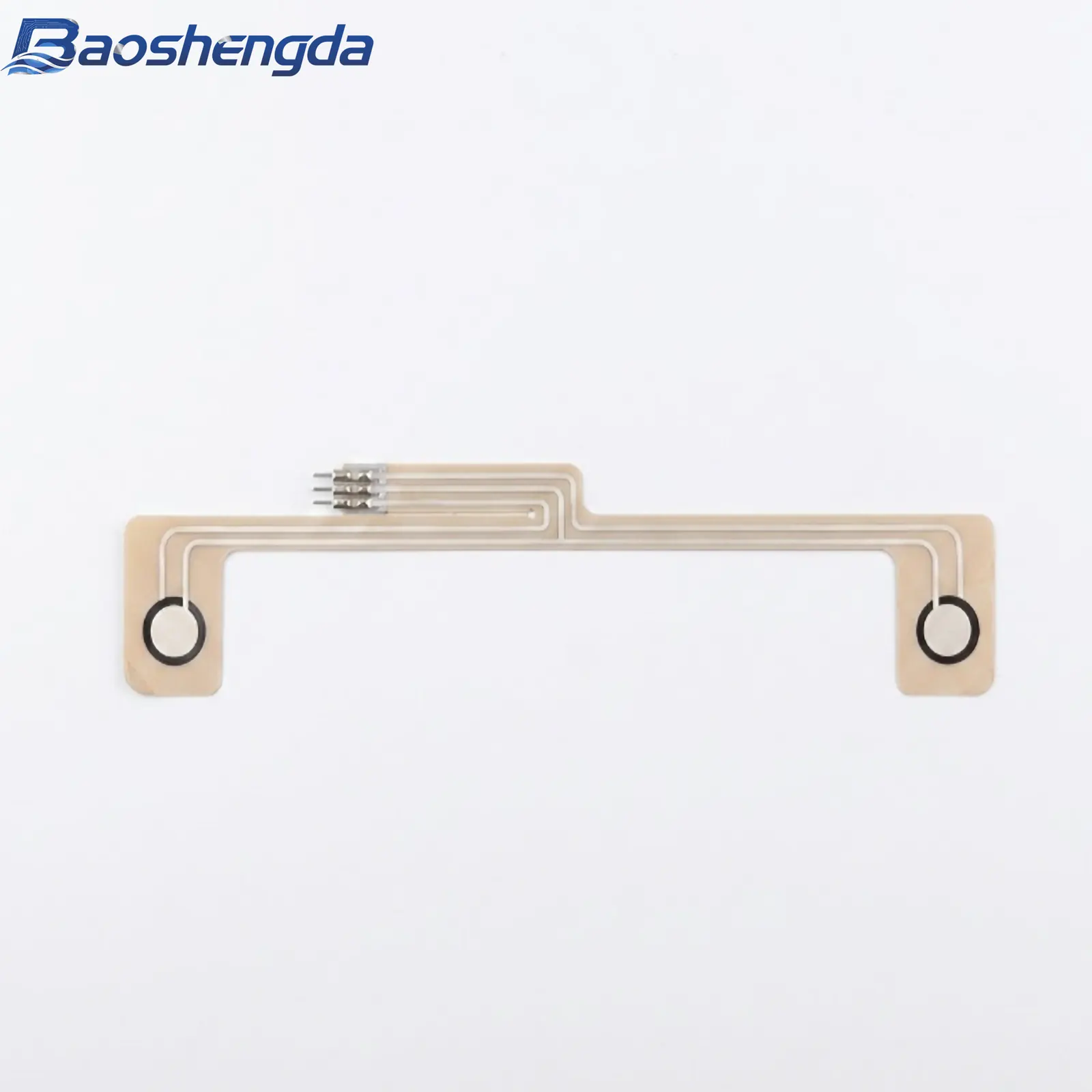
Quick answer: before asking for an FSR pressure sensor sample, buyers should define the force range, contact area, actuator shape, reading circuit, calibration method, operating environment, tail route, and acceptance test. An FSR sensor is not a simple drop-in part. Its output depends on the sensor film, the mechanical structure above it, the circuit, and how the product interprets pressure changes.
This guide is written for engineers, sourcing teams, and product developers preparing a custom force sensing resistor or thin film pressure sensor project. It helps turn an early idea into a clearer RFQ so the first sample can be closer to the real application.
What is the sensor expected to detect?
Start with the purpose of the signal. Some products only need to know whether pressure is present. Others need relative force change, multi-level input, seating detection, grip feedback, rehabilitation movement feedback, or a pressure-related safety threshold.
Write the expected behavior in plain language before discussing the film structure. For example:
- Detect whether a user is pressing a soft key area.
- Tell whether a seat, cushion, or wearable zone is loaded.
- Measure relative pressure change during repeated movement.
- Trigger an alarm when force passes a defined threshold.
- Compare pressure distribution across several sensing points.
These applications may all use FSR technology, but they do not need the same sensor shape, connector layout, circuit, or calibration plan.
What force range should be discussed?
A useful FSR inquiry should include the expected low, normal, and high force conditions. If the exact force is unknown, share the product use case, contact area, and any reference sample. The supplier can then help estimate a practical sensing range for the first prototype.
Avoid only writing "high sensitivity" or "wide range". Those words do not tell the engineering team how the sensor will be pressed. A small fingertip load, a shoe insole load, a medical pad load, and an automotive seat load create very different mechanical conditions.
For early discussion, try to provide:
- Minimum force that should be detected.
- Normal operating force or pressure.
- Maximum expected load.
- Whether overload may happen.
- Whether the force is static, pulsed, or repeated.
- Whether the reading needs to be continuous or only threshold-based.
The force range may change after testing, but a first assumption is still better than no assumption.
How will pressure reach the sensing area?
The mechanical stack above the FSR is as important as the printed sensor itself. A rigid actuator, soft foam, silicone rubber, fabric, housing rib, or user finger will spread pressure differently.
Confirm:
- Contact area size and shape.
- Whether the actuator is hard, soft, flat, round, or curved.
- Whether pressure is centered or may hit the edge of the sensing zone.
- Whether a spacer, foam, dome, rubber pad, or cover layer sits above the sensor.
- Whether the sensor is bonded to plastic, metal, textile, or another substrate.
If the actuator is too small, it may create a concentrated point load. If it is too soft, the response may be delayed or less repeatable. If it is misaligned, the sensor may pass bench tests but fail after assembly.
What accuracy does the project really need?
FSR sensors are often practical for relative force, pressure trend, threshold detection, and compact thin-film input. They are usually not selected when a project needs laboratory-grade absolute force measurement without calibration.
Before sampling, decide what level of decision is required:
- Simple on/off pressure detection.
- Low, medium, and high pressure levels.
- Relative change over time.
- Matched response between several sensing points.
- Calibrated output within a defined tolerance.
This decision affects material selection, circuit design, test method, and cost. If the product only needs threshold detection, do not over-specify precision. If the product needs repeatable measurement, the RFQ should include calibration and test conditions from the start.
Which circuit will read the sensor?
An FSR changes resistance under pressure. The final signal depends on the reading circuit, supply voltage, resistor selection, ADC resolution, filtering, firmware, sampling rate, and calibration method.
A supplier can manufacture the sensor film, but the buyer should still discuss the electronics context. Useful information includes:
- Voltage or circuit concept if available.
- Pull-up or pull-down resistor value if already chosen.
- ADC resolution and sampling rate.
- Whether the system reads one point or multiple channels.
- Whether noise filtering is handled in hardware or firmware.
- Connector pitch, pin count, and contact direction.
If the electronics team has not frozen the circuit, say that clearly. The prototype can then be treated as a joint sensor-and-circuit evaluation rather than a finished specification.
How should calibration be handled?
Calibration is the step that turns a changing resistance into useful product behavior. For many FSR projects, the sensor response curve, actuator, temperature, and assembly pressure all influence the final reading.
Common calibration questions:
- Will each product be calibrated individually, or will one curve be used for the batch?
- Is the product measuring absolute force or detecting thresholds?
- What load points should be used during test?
- How long should the sensor be held under load before reading?
- Does the reading need compensation for temperature or long-term drift?
- Will the firmware store reference values after assembly?
For early prototypes, simple calibration points are often enough to learn whether the structure is suitable. For production, the calibration method should be written into the quality plan.
What should buyers know about drift and repeatability?
FSR output can be affected by loading time, repeated cycling, temperature, humidity, actuator material, and how the sensor is laminated or mounted. This does not make the technology unsuitable. It means the application should define what repeatability is required and how it will be checked.
Ask these questions before approving a sample:
- Does the reading need to stay stable under a long static load?
- How many press cycles are expected in normal use?
- Will the product be used in heat, cold, sweat, cleaning liquid, or outdoor humidity?
- Is the sensor measured immediately after pressing or after a dwell time?
- Is the acceptance based on exact value, percentage change, or threshold response?
The right test method should imitate the real product use. A quick finger press on a desk is useful for orientation, but it is not enough for production approval.
What does the sensor tail need?
Tail routing is easy to ignore in FSR projects because the sensing area gets most of the attention. In production, the tail still needs to fit the housing, connector, and assembly process.
Confirm:
- Tail exit direction and length.
- Bend radius inside the housing.
- Connector type, pitch, pin count, and contact side.
- Stiffener location and thickness if a connector is used.
- Whether the tail crosses a moving part, sharp edge, or compression zone.
- Whether adhesive or strain relief is needed near the tail exit.
A sensor can respond correctly on the bench and still fail if the tail is folded sharply or pulled during assembly.
What should be included in the RFQ?
For a clearer FSR pressure sensor quotation, send:
- Application and product photos or drawings.
- Sensing area size, shape, and number of points.
- Expected force or pressure range.
- Actuator, cover layer, housing, or material stack above the sensor.
- Reading circuit details if available.
- Connector and tail route requirements.
- Operating environment and cleaning exposure.
- Sample quantity, production quantity, and target schedule.
- Acceptance test method or known failure from the previous version.
If exact values are not ready, send the closest available assumptions and mark them as assumptions. That lets the supplier quote the first sample with fewer hidden risks.
Sample approval checklist
Before moving from prototype to production, check:
- Sensor outline, hole, and tail dimensions.
- Response under the real actuator or housing stack.
- Low, normal, and high load readings.
- Repeatability after several press cycles.
- Drift under the required dwell time.
- Connector fit and tail bend condition.
- Adhesive bonding and edge lifting risk.
- Temperature, humidity, or cleaning exposure if relevant.
- Firmware threshold or calibration behavior.
Keep the approved sample, test setup, and circuit settings together. Without the test setup, a later production comparison may not mean much.
Practical takeaway
An FSR pressure sensor project should be quoted around the full sensing system, not only the film outline. The buyer needs to define how pressure enters the sensor, how the circuit reads the response, and how the product decides that the reading is acceptable.
Baoshengda can review FSR drawings, sensing-zone layouts, tail routing, actuator conditions, and sample requirements before quotation. Clear input at the RFQ stage makes the first sample more useful and reduces avoidable changes after testing.
Need help reviewing a structure?
Send your drawing, photos, application, and quantity. Baoshengda can help check the structure before sampling.
Send Drawing for Quote