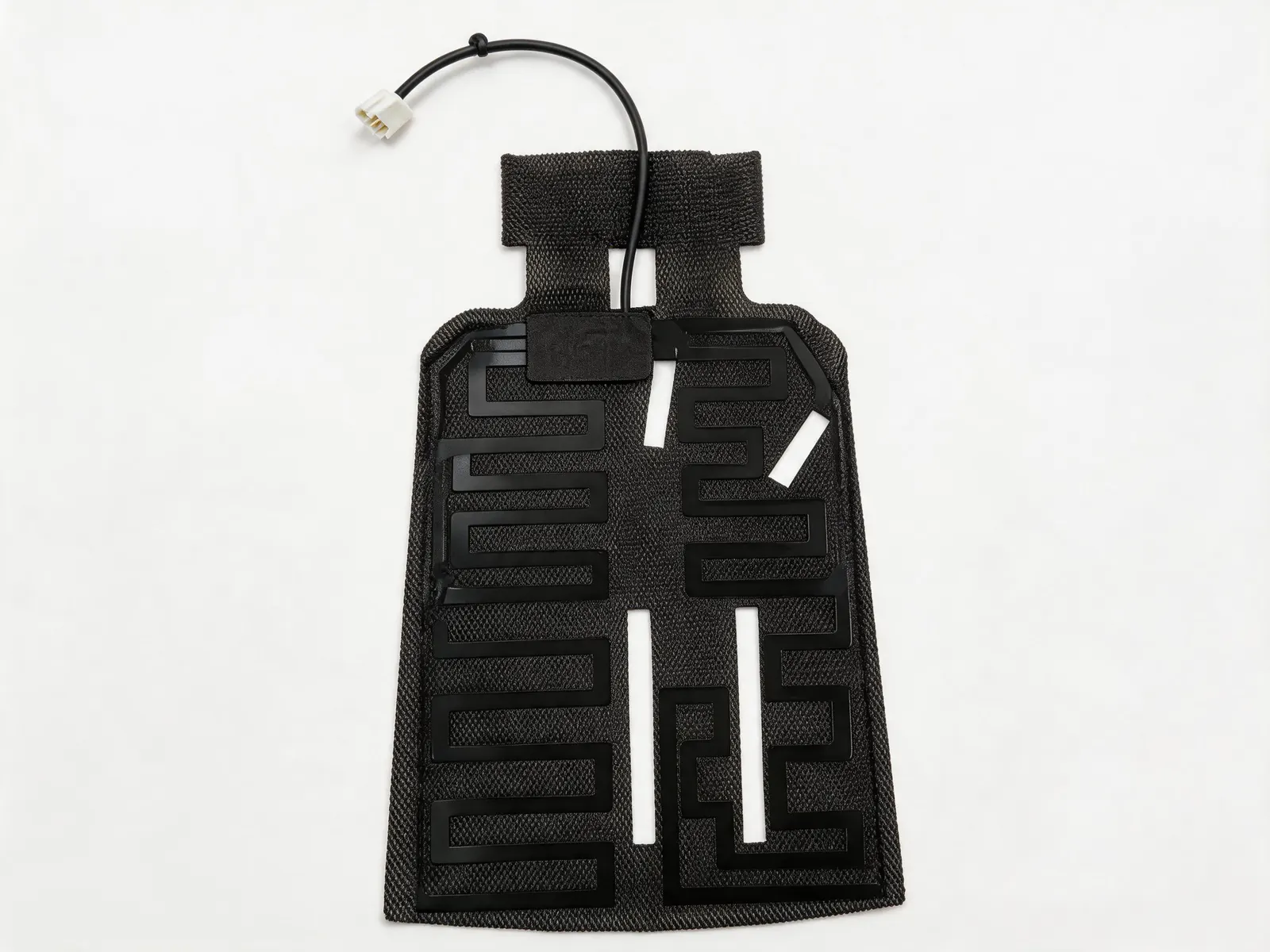
What Is a Flexible Heating Film?
A flexible heating film is a thin heating element that converts electrical energy into thermal energy using carbon or conductive heating materials.
Direct buyer answer: before sampling, define the coldest surface, the first area that must recover, available voltage, target temperature limit, adhesive surface, sensor location and cable exit. The film cannot fix a poorly insulated enclosure by itself, so the mounting stack and control method should be reviewed together.
It is widely used for EV battery thermal management, automotive seat heating, medical therapy heating pads, industrial temperature control systems, smart wearable heating and home appliance heating modules.
The final heating behavior depends on resistance design, voltage, film size, insulation, adhesive, mounting surface, airflow, thermal mass and control electronics. These points should be reviewed before prototype production.
Flexible Heating Film Structure
PET / PI Base FilmFlexible base material selected according to thickness, bend requirement, temperature range and application environment.
Carbon Heating LayerCarbon or conductive ink heating pattern designed for target resistance, power and heat distribution.
Conductive Silver BusbarConductive busbar structure helps distribute current into the heating pattern and connection area.
Insulation LayerProtective insulation helps separate the heating circuit from the mounting surface and user contact areas.
Temperature Sensor IntegrationOptional sensor or control interface can be reviewed for closed-loop temperature control.
Adhesive Backing Layer3M or industrial adhesive can be selected for bonding to metal, plastic, fabric, battery modules or other surfaces.
Technical Specifications
ItemOptions / Description
Product TypeFlexible heating film, carbon heating element, custom thermal management film
MaterialPET or PI base film, selected according to application requirement
Heating LayerCarbon or conductive ink heating pattern
Thickness0.1-0.3mm typical structure, customizable by project
VoltageLow voltage or custom voltage based on heating area and power design
Temperature RangeApplication dependent, confirmed by structure and control design
Heating ModeUniform heating or zoned heating layout
EfficiencyHigh energy efficiency when resistance, voltage and mounting conditions are matched
Adhesive3M or industrial adhesive, selected according to bonding surface
ApplicationsEV, medical, industrial, automotive seat heating, smart wearable and consumer electronics
Final specifications depend on heating area, voltage, target temperature, installation surface, control method and operating environment.
Key Advantages
Thin and Flexible
- Ultra-thin flexible structure for compact thermal assemblies
- Can be reviewed for curved or irregular surfaces
- Easy integration into existing equipment or modules
Heating Performance
- Fast heating response based on power design
- Uniform heat distribution through custom pattern layout
- Zoned heating can be designed for different thermal areas
Custom Engineering
- Custom shape and size design
- Voltage and resistance tuning
- Temperature sensor and connector integration options
System Integration
- Low energy consumption when matched with the control system
- Adhesive backing options for different substrates
- Waterproof and protection layers can be reviewed
Applications
Flexible heating films are useful where a thin heating element must fit into limited space, follow a non-flat surface, or warm a local interface before condensation, cold-start drag or user-contact discomfort becomes a problem.
Outdoor Energy and EV Cabinets
Local heat can be reviewed for door seals, inspection windows, sensors, connectors or battery-adjacent modules where cold starts or condensation create a service risk. Heat placement should follow the real cold spot, not only the easiest flat surface.
Automotive Seat Heating Systems
Flexible heating structures for seat pads, interior comfort systems and vehicle thermal modules.
Medical Therapy Devices
Thermal therapy pads, warming modules and controlled heating areas for medical or rehabilitation devices.
Smart Wearable Heating Systems
Thin heating areas for wearable products, warm pads and soft electronic modules.
Industrial Temperature Control
Localized heating for instruments, sensors, control boxes, cleaning equipment, security terminals, test devices and industrial assemblies.
Home Appliance Heating Modules
Custom heating elements for appliance subassemblies that need a thin and controlled heat source.
Placement Decisions for Outdoor Energy and Low-Temperature Equipment
For energy-storage cabinets, charging equipment, outdoor terminals and instruments, the heating film should be placed where it solves a defined function: clearing condensation from a window, warming a seal path, stabilizing a sensor area, or helping a local module recover after the first shift starts.
DecisionWhat buyers should confirm
Heat targetWindow, seal, connector area, sensor pocket, battery-adjacent surface or user-contact zone.
Mounting surfaceMetal, plastic, glass, fabric or coated housing surface, including flatness and adhesive compatibility.
Control methodOpen-loop power, thermostat, NTC feedback or equipment-side controller with safe temperature limits.
Failure riskHot spots, poor adhesion, cable strain, moisture at the edge, over-heating of nearby plastic, or slow recovery because the film is placed too far from the cold point.
When the project involves a cabinet, door or sealed enclosure, include a simple section view in the RFQ so the heating area, adhesive layer, lead exit and sensor position can be checked before tooling.
Customization Options
Heating Layout
- Heating zone layout design
- Uniform or zoned heat distribution
- Custom shape, cutouts and size
- Resistance and power density review
Electrical Design
- Voltage and resistance tuning
- Connector and lead wire design
- Temperature sensor integration
- Control interface review with customer electronics
Material and Assembly
- PET or PI base film selection
- 3M or industrial adhesive backing
- Waterproof sealing design
- Flexible installation into curved surfaces
Protection Options
- Insulation layer design
- EMI or safety protection layer if required
- Edge protection and tail strain relief
- Application-specific durability review
Quality and Testing
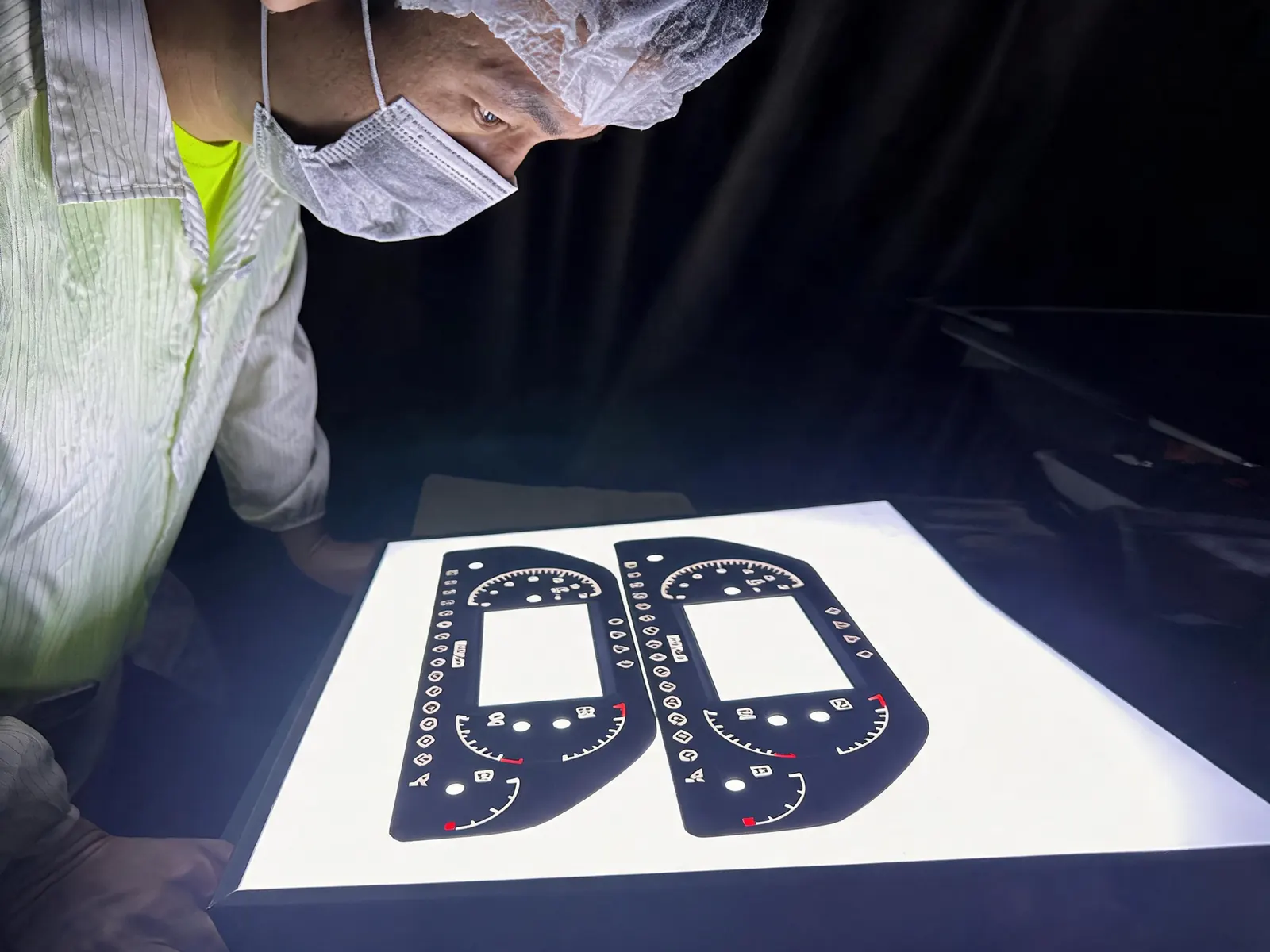
Quality and reliability checks can be planned according to the heating film application, target temperature and operating environment.
- Resistance uniformity test
- Heating distribution test
- Thermal cycling test
- Voltage stability test
- Adhesion strength test
- Aging and durability test
- Insulation and visual inspection
- Connector and lead wire inspection
- Temperature sensor function check if used
- RoHS / SGS compliance support where applicable
Design Information Needed for Quotation
To help us review the heating film structure and provide a practical quotation, please send available project information.
- 2D drawing, 3D file, target shape or mounting area
- Required voltage, resistance, power or target temperature if known
- Heating area, uniformity requirement and possible zoned heating layout
- Base material preference such as PET or PI
- Adhesive, insulation, waterproof or protection requirement, including the exact mounting surface
- Connector, lead wire, strain relief and temperature sensor requirement
- Application environment, cold-start condition, operating time and control method
- Prototype quantity, annual quantity and target lead time
Download Flexible Heating Film Brochure
Request an overview of Baoshengda's custom flexible heating film structure, carbon heating layer options, thermal design support, quality checks and quotation requirements.
Request Product Brochure
FAQ
What is heating film used for?
Flexible heating films are used for EV, automotive, medical and industrial heating applications, including battery heating, seat heating, thermal therapy and temperature control modules.
Is it flexible?
Yes. It is designed for flexible integration and can be reviewed for curved or irregular surfaces based on the product structure.
What is the thickness?
Typical structures can be around 0.1-0.3mm, with final thickness depending on base film, insulation, heating layer, adhesive and project requirements.
Can it be customized?
Yes. Full OEM and ODM customization can include shape, size, voltage, resistance, heating zones, adhesive, connector and sensor integration.
Is it energy efficient?
Yes. Low power consumption and uniform heating can be achieved when the resistance pattern, voltage, heating area and thermal environment are designed together.
Where should the heating film be placed in an outdoor cabinet?
Place it near the functional cold point, such as a window, seal path, sensor area, connector pocket or local module that must recover first. The RFQ should include the housing section, mounting surface and cable exit.
Part of Baoshengda HMI system ecosystem
Flexible heating films are the thermal layer inside Baoshengda HMI system solutions. They can support local heating, temperature control or low-temperature operation in EV, medical and industrial interface assemblies.
Related Flexible Heating Film Buyer Guides
These guides cover outdoor energy-cabinet placement, condensation recovery, anti-fog use and the design inputs buyers should define before requesting a heating-film sample.
Need a custom flexible heating film solution for your project?
Send the heating area, voltage, target temperature, mounting surface, sensor plan, lead-wire exit and application environment. Baoshengda can review the structure before prototype tooling.