Overview
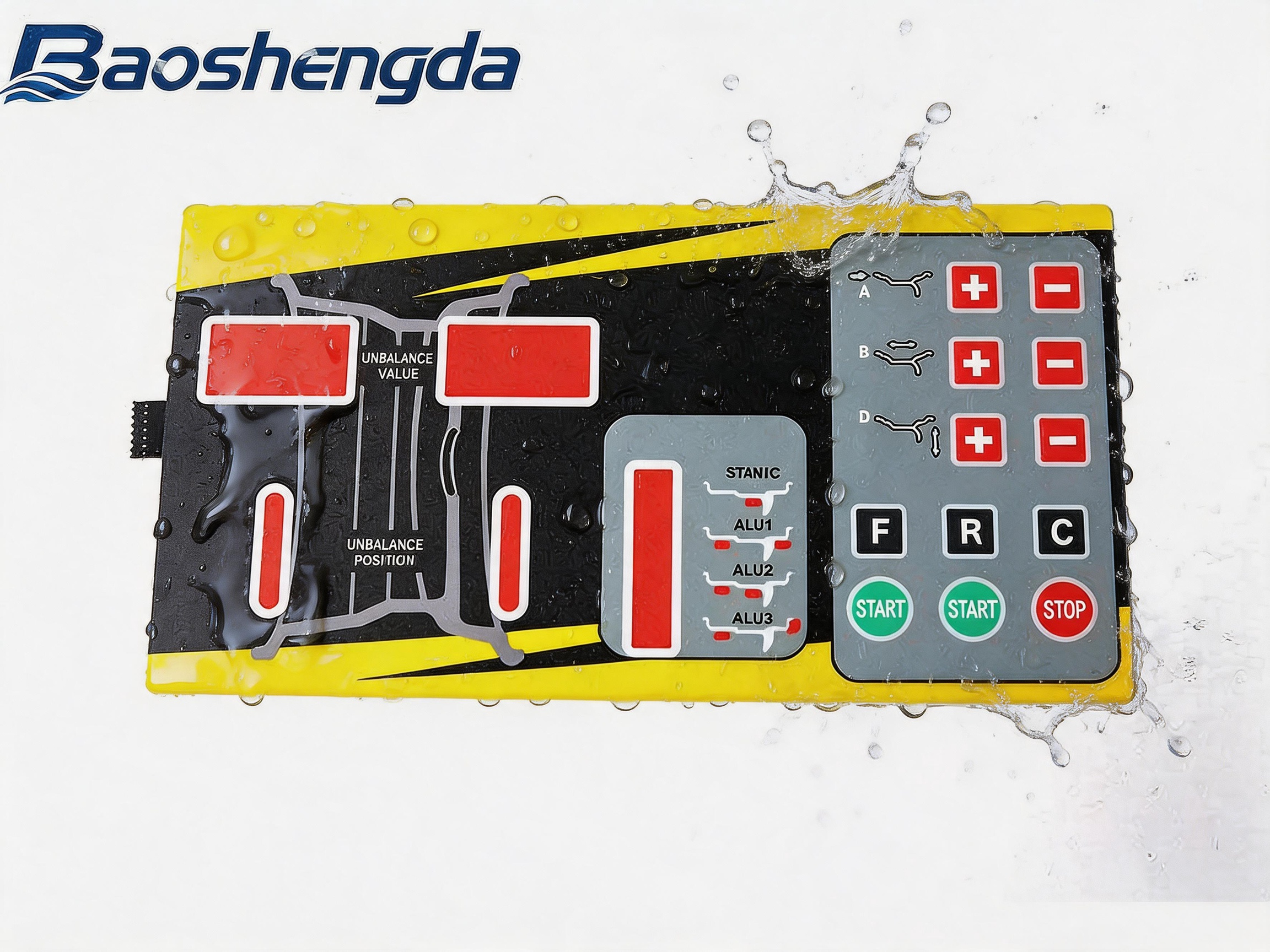
A waterproof membrane switch is designed to reduce the risk of liquid entering the circuit or lifting the overlay from the housing. It can be used for industrial control, outdoor instruments, medical devices, cleaning equipment, vehicle accessories, food-related equipment, and other interfaces that need a sealed surface.
The buyer should describe the actual exposure instead of only writing waterproof. Occasional wiping, splash, rain, humidity, oil, alcohol cleaning, and immersion are very different design problems.
When a membrane switch needs waterproof design
- The product is used outdoors or near water, oil, cleaning liquid, or dust.
- Operators clean the panel with alcohol, detergent, disinfectant, or wet cloth.
- The equipment is used in medical, food, industrial, laboratory, or vehicle environments.
- The housing has openings, display windows, seams, screw areas, or exposed panel edges.
- The old switch failed because of water ingress, edge lifting, corrosion, or intermittent function.
IP rating considerations
IP ratings describe protection levels, but the membrane switch alone does not guarantee the rating of the complete product. The final result depends on the housing, assembly method, gasket, panel bonding area, tail exit, connector area, and test condition.
If the project has a target IP rating, send the housing drawing and test requirement. The membrane switch design can then be reviewed as part of the complete enclosure instead of an isolated film part.
Edge sealing
Panel edges are a common risk point. Water can enter through a poorly bonded edge, an exposed spacer opening, a window cutout, or a tail exit. Edge sealing may involve adhesive coverage, controlled spacer openings, sealed perimeter design, and enough bonding area around the active key zones.
Avoid placing switch contacts too close to the outer edge unless the structure has been reviewed. A narrow edge may look compact on artwork but leave little room for waterproof protection.
Tail exit protection
The tail is often the hardest area to seal because it must leave the panel and connect to the PCB. The route should avoid sharp bends, housing ribs, screw bosses, and open channels where liquid can travel. A protected tail exit, strain relief, and correct stiffener can improve reliability.
Mark tail direction, length, bend direction, connector type, and housing route on the drawing. A housing photo can reveal risks that the flat artwork does not show.
Adhesive selection
Waterproof performance depends heavily on adhesive and mounting surface. Plastic, metal, painted surfaces, textured covers, and curved housings need different review. Surface cleanliness and assembly pressure also matter.
For waterproof panels, the adhesive should be selected with the environment in mind: humidity, heat, outdoor exposure, cleaning chemicals, oil, or vibration. The bonding area should be wide enough to keep the edge stable.
Outdoor exposure
Outdoor use brings UV, temperature change, rain, dust, and possible condensation. The overlay material, printed colors, adhesive, window area, and housing seal should all be reviewed. If the product sits under direct sunlight, tell the factory early.
A sample should be tested in conditions close to the real product environment. A simple room-temperature water splash check is not enough for every outdoor project.
Cleaning chemical exposure
Medical devices, laboratory equipment, and industrial panels may be cleaned with alcohol, detergent, disinfectant, or other chemicals. These can affect surface appearance, printing, adhesive, and window clarity. Share the cleaning method and chemical type if known.
If the cleaning liquid is not known yet, describe the industry and normal maintenance process. The design can be reviewed conservatively without inventing a test result.
Common waterproof design mistakes
- Asking for waterproof design without describing the actual exposure.
- Putting circuit traces or switch contacts too close to the outer edge.
- Leaving the tail exit unprotected or forcing a sharp fold near the housing.
- Using a narrow adhesive border around a display window or key zone.
- Ignoring housing surface texture, dust, oil, or assembly pressure.
- Assuming the membrane switch alone defines the final product IP rating.
Testing suggestions
Samples should be checked for appearance, edge bonding, key function, electrical continuity, insulation, tail strength, connector fit, and any project-specific water exposure requirement. For IP-rated products, the test should be defined at the complete product level.
If the old product had water ingress, send failed samples or photos. The failure path often shows which part of the structure needs redesign.
Applications
- Outdoor instruments, control boxes, and monitoring equipment.
- Medical devices and cleanable front panels.
- Industrial machines, food-related equipment, and laboratory devices.
- Vehicle accessory controls and sealed control surfaces.
- Home appliances or smart equipment exposed to water or cleaning.
What to send for quotation
A clear quotation starts with ordinary project facts. If some files are not available yet, send what you have and mark the missing items as open for review.
- 2D drawing with size, outline, button positions, window areas, and tail exit.
- 3D file or housing photos if available.
- Sample photos or an old part if the project is a replacement.
- Application environment, including indoor, outdoor, cleaning, moisture, oil, or heat exposure.
- Prototype quantity and expected production quantity.
- Material requirement, surface finish, color reference, and artwork files.
- Connector requirement, tail direction, pin count, and mating board details.
- Waterproof, backlight, LED, FPC, adhesive, or special reliability requirements.
- Target lead time for samples and mass production.
Related resources
FAQ
Can a membrane switch be waterproof?
Yes, but waterproof reliability depends on the complete structure: edge sealing, adhesive, spacer design, tail exit, housing fit, and final product assembly.
Does the membrane switch alone guarantee an IP rating?
No. The full product enclosure, housing, gasket, connector, tail route, and test condition determine the final IP result.
What information should I send for waterproof design?
Send drawings, housing photos, water exposure level, cleaning method, target IP rating if any, tail route, connector details, quantity, and target lead time.
Can you help with tail exit protection?
Yes. The tail exit can be reviewed for bend radius, route, reinforcement, connector fit, and sealing risk.
Can waterproof switches be used outdoors?
Yes, if the design accounts for UV, temperature change, rain, adhesive stability, surface material, and housing protection.
What are common causes of leakage?
Narrow adhesive borders, exposed spacer openings, poor tail exit design, housing surface issues, window gaps, and unrealistic assembly pressure are common causes.
Can you make samples for testing?
Yes. Samples can be made for appearance, bonding, function, and project-specific sealing checks before mass production.