Overview
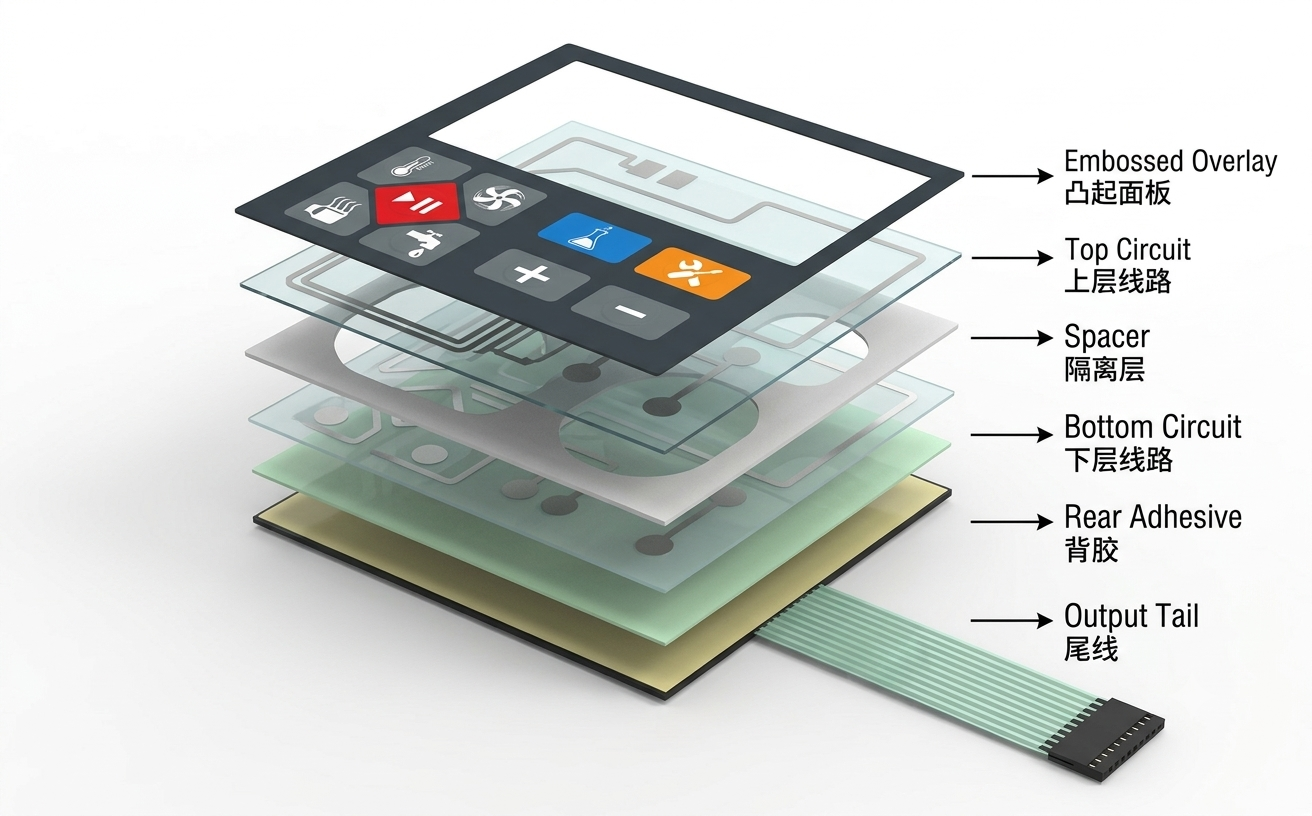
A membrane switch is not a single printed sheet. It is a thin human-machine interface assembly where the visible overlay, button feel, circuit, spacer, adhesive, tail, and connector must work together. For overseas buyers, the main value of a factory partner is not only making the part, but helping confirm the structure before sampling so the panel fits the housing and survives real operation.
Baoshengda supports OEM membrane switch projects where the buyer needs custom size, custom key layout, custom printing, special surface finish, LED or backlit areas, waterproof edge design, FPC tail, or a connector-ready assembly. The company is a manufacturing factory in Shenzhen, China, not a trading office.
What is a membrane switch?
A membrane switch is a low-profile electrical switch made from flexible film layers. When a user presses a key area, the circuit closes through a conductive contact or metal dome, sending a signal to the equipment control board. The top layer can also carry brand graphics, icons, transparent display windows, indicator windows, and user instructions.
The structure is common in machine controls, medical instruments, vehicle accessories, test equipment, household appliances, and embedded electronic products because it is thin, sealed, easy to clean, and highly customizable.
Common structures
- Graphic overlay with PET or PC material, printed legends, windows, icons, logo, texture, and optional embossing.
- Upper and lower circuit layers using silver printed circuit or FPC depending on routing, density, bend, and connector needs.
- Spacer layer that creates the switch gap and controls key travel.
- Metal dome or carbon contact structure for tactile response where needed.
- Rear adhesive layer selected according to the housing material and use environment.
- Tail exit, stiffener, connector, and optional LED or backlight features.
Tactile vs non-tactile options
Tactile membrane switches use metal domes or formed structures to give a clear click. They fit equipment where the user needs operation feedback, especially when looking away from the panel or wearing gloves. The dome position, actuation force, embossing, and overlay thickness all affect the final feel.
Non-tactile membrane switches are flatter and quieter. They can be useful for sealed panels, simple controls, or designs where the equipment provides audio, light, or screen feedback. Buyers should tell the factory whether the user needs a strong click, light click, or smooth press before samples are made.
Layer stack and materials
PET is widely used for durable membrane switch overlays and flexible circuit layers. PC can be selected for some appearance or forming requirements, but the final choice depends on wear, chemical exposure, window clarity, surface finish, and assembly method. The adhesive and spacer should be chosen together with the housing material, not after the artwork is finished.
The best design is usually confirmed from the product environment: indoor or outdoor use, cleaning fluid exposure, oil, humidity, heat, dust, user pressure, required lifetime, and whether the switch will be assembled to plastic, metal, glass, or coated housing.
Circuit options
- Silver printed circuit for many standard membrane switch layouts and cost-sensitive panels.
- FPC circuit when routing is dense, bend reliability is important, or the tail must connect cleanly to a compact board.
- LED circuit integration for indicator areas or backlit keys.
- Connector-ready tail with ZIF, LIF, pin header, socket, or customer-specified connection.
- Tail stiffener and reinforcement when the tail enters a connector or passes through a narrow housing.
Graphic overlay options
The overlay decides how the product looks and how the user experiences the interface. It can include matte or gloss surfaces, anti-scratch textures, transparent windows, dead-front graphics, icons, logos, transparent LED windows, embossed keys, rim embossing, and color-matched printing.
Artwork files should define the exact visible area, cut line, color reference, clear windows, button centers, and any embossing. If the buyer is copying an old sample, photos of wear marks and damaged areas are useful because they reveal real-use risks.
Adhesive and spacer design
Adhesive performance depends on the housing surface, assembly pressure, temperature, cleaning method, and edge exposure. A membrane switch bonded to a flat clean metal surface is different from one bonded to textured plastic or a curved cover. Spacer design also affects key feel, waterproofing, and circuit reliability.
Before quotation, send a housing photo or assembly drawing if available. It helps the factory review bonding area, tail exit, edge sealing, screw bosses, ribs, and possible interference.
Applications
- Industrial control panels, machine interfaces, PLC panels, inverter controls, and automation equipment.
- Medical device keypads, laboratory instruments, and cleanable front panels.
- Automotive electronics, vehicle accessories, seat controls, and dashboard-related control surfaces.
- Smart equipment, home appliances, remote controls, instruments, and electronic products.
- Outdoor or wet-environment equipment when waterproof design is required.
Design considerations
Important design questions include the panel size, key layout, actuation feel, display window, LED area, surface finish, adhesive, tail direction, connector pitch, housing material, waterproof requirement, and target order quantity. These details are easier to correct before tooling and sampling.
If an old membrane switch failed, describe the failure: edge lifting, cracked tail, weak printing, water ingress, poor click feel, unstable contact, or connector mismatch. Failure history is useful design information, not a problem to hide.
Quality control points
- Incoming material check for overlay film, adhesive, circuit material, and connector parts.
- Printing alignment, color appearance, window clarity, and surface inspection.
- Die cutting accuracy, spacer opening, tail position, and adhesive edge quality.
- Electrical continuity, insulation, key function, LED function, and connector fit.
- Final appearance inspection, packaging review, and outgoing quality check before shipment.
What to send for quotation
A clear quotation starts with ordinary project facts. If some files are not available yet, send what you have and mark the missing items as open for review.
- 2D drawing with size, outline, button positions, window areas, and tail exit.
- 3D file or housing photos if available.
- Sample photos or an old part if the project is a replacement.
- Application environment, including indoor, outdoor, cleaning, moisture, oil, or heat exposure.
- Prototype quantity and expected production quantity.
- Material requirement, surface finish, color reference, and artwork files.
- Connector requirement, tail direction, pin count, and mating board details.
- Waterproof, backlight, LED, FPC, adhesive, or special reliability requirements.
- Target lead time for samples and mass production.
Related resources
FAQ
What files do you need for quotation?
A 2D drawing, artwork file, sample photos, application environment, quantity, connector requirement, material preference, waterproof or backlight requirement, and target lead time are useful for a reliable quotation.
Can you make samples before mass production?
Yes. Custom membrane switch projects usually need samples to confirm appearance, tactile feel, circuit function, adhesive fit, tail route, and assembly fit before repeat production.
Can you support tactile and non-tactile membrane switches?
Yes. The structure can be designed with metal domes for tactile feedback or with flat non-tactile contacts depending on the user interface requirement.
Can you support waterproof design?
Yes. Waterproof design can include edge sealing, suitable adhesive, protected tail exit, sealed windows, and housing-fit review. The required exposure should be described clearly before sampling.
Can you produce based on an old sample?
Yes. Photos and physical samples are useful, especially when the original drawing is missing. The structure still needs to be reviewed before production.
What is your MOQ?
MOQ depends on structure, material, tooling, and sample requirements. For early projects, send the expected prototype and production quantity so the factory can quote realistically.
How do you control quality?
Typical checks include material review, printing inspection, die-cut accuracy, electrical continuity, insulation, key function, connector fit, appearance inspection, and outgoing QC.