Overview
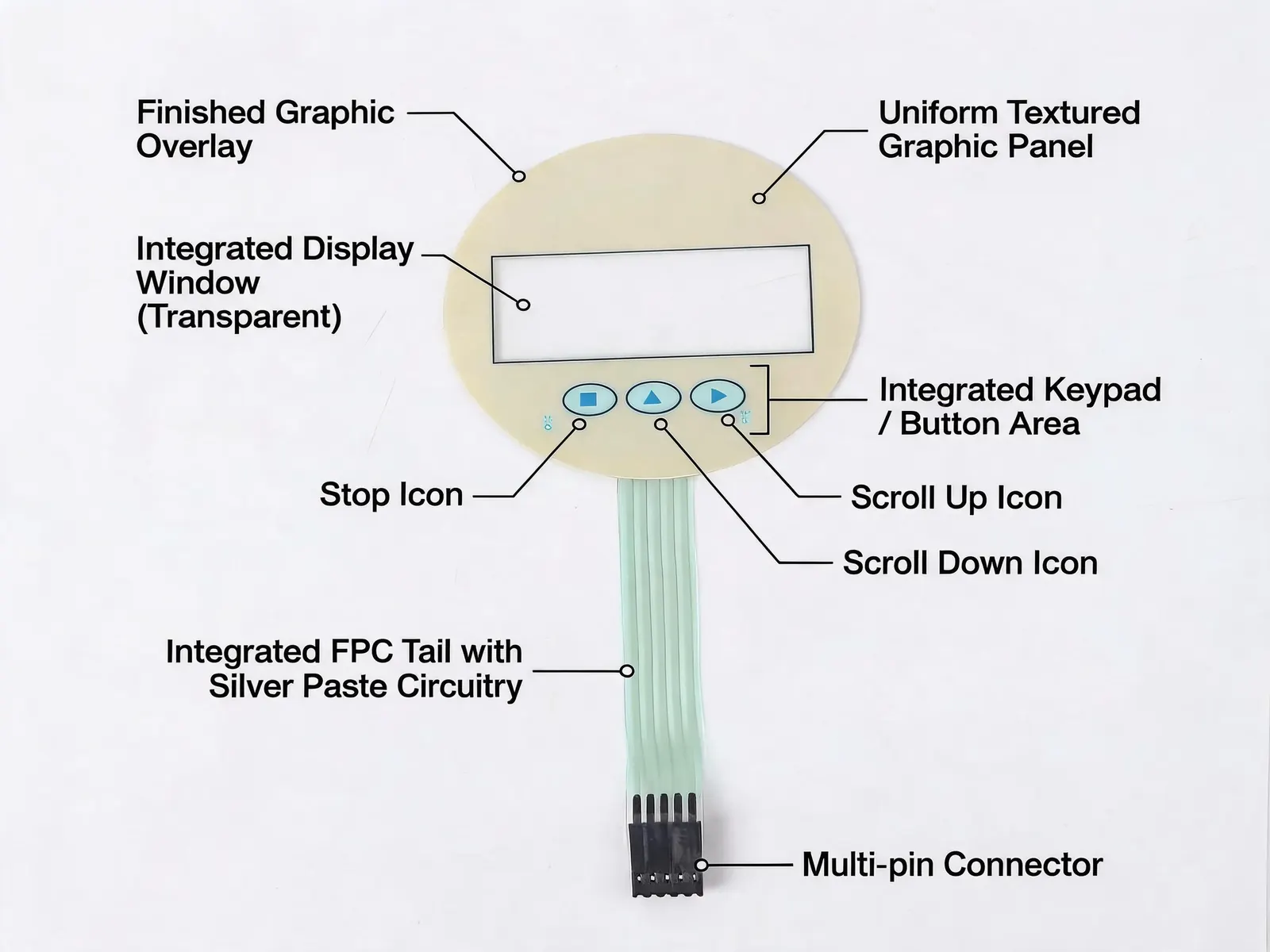
A custom graphic overlay is the visible control surface on a product. It carries icons, button legends, display windows, branding, color zones, warning symbols, and user instructions. It also protects the panel surface from finger wear, cleaning, dust, oil, light exposure, and daily handling.
For OEM buyers, the most important early decisions are material, surface finish, window design, adhesive, color matching, and whether the overlay needs embossing, backlit areas, or integration with a membrane switch layer.
What is a graphic overlay?
A graphic overlay is usually made from polyester or polycarbonate film with reverse printing and adhesive backing. It can be die-cut to fit a housing, display, button pattern, LED indicator, or product shape. The overlay may be flat, embossed, textured, matte, gloss, hard-coated, or designed with transparent windows.
When used on industrial and electronic equipment, the overlay must do more than look good. It must stay bonded, keep the printed graphics protected, align with the housing, and allow the user to understand the interface quickly.
PET vs PC materials
PET is commonly selected for durable overlays where repeated pressing, flexibility, and long-term surface stability matter. It is often used for membrane switch overlays and control panels that see frequent operation.
PC can be useful for certain appearance requirements, forming needs, or thicker front panel designs. The final selection should consider expected wear, chemical exposure, UV exposure, embossing style, window clarity, and the surface feel the user expects.
Surface finish options
- Matte surface for reduced reflection and cleaner appearance under equipment lighting.
- Gloss surface where a bright product look or clear window area is needed.
- Textured or hard-coated surfaces for finger wear and handling resistance.
- Clear display windows for LCD, LED, screen, or indicator areas.
- Dead-front graphics where symbols appear only when backlit.
Printing and color matching
Color matching should be handled with a physical reference whenever possible. Digital screen colors do not reliably represent printed PET or PC. Buyers can send Pantone references, old sample panels, brand color standards, or approval photos, but final approval should be based on printed samples.
Important print details include reverse printing, opaque backing, transparent windows, LED diffusion, icon sharpness, text legibility, registration, and whether the overlay will be used with backlighting.
Embossing options
- Key embossing to help users locate buttons by touch.
- Rim embossing to outline key areas without changing the full surface.
- Logo or symbol embossing for brand or interface emphasis.
- No embossing when a clean flat panel or sealed wipeable surface is preferred.
Window and display area design
Windows need special attention because they affect readability and appearance. The drawing should show the visible window area, hidden border, display position, adhesive clearance, transparency requirement, and whether the display sits behind glass, plastic, LCD, LED, or another module.
For products exposed to cleaning or outdoor light, ask whether anti-scratch surface, UV stability, anti-glare texture, or special window treatment is needed. Avoid placing adhesive too close to the visible window unless the structure has been reviewed.
Adhesive selection
Adhesive should match the housing material and use environment. Plastic, metal, powder coating, glass, textured housing, and curved surfaces behave differently. A photo of the mounting surface is often more useful than a long written description.
The bonding area, edge distance, cleaning method, heat exposure, and assembly pressure should be discussed before samples. Edge lifting is often caused by a mismatch between adhesive, housing surface, and real-use environment.
Applications
- Industrial control panels and machine front panels.
- Medical equipment overlays and cleanable control surfaces.
- Automotive accessory panels, backlit symbols, and switch fronts.
- Instrument panels, displays, meters, terminals, and electronic devices.
- Home appliance and smart equipment interface labels.
Quality inspection
Graphic overlay inspection focuses on color, print registration, surface scratches, die-cut shape, window clarity, adhesive coverage, contamination, and package protection. If the overlay is part of a switch assembly, electrical and tactile function must also be checked.
Buyers should approve samples under realistic lighting and assembly conditions. A panel that looks acceptable on a table may look different once it is bonded to a black housing or placed over a display.
What to send for quotation
A clear quotation starts with ordinary project facts. If some files are not available yet, send what you have and mark the missing items as open for review.
- 2D drawing with size, outline, button positions, window areas, and tail exit.
- 3D file or housing photos if available.
- Sample photos or an old part if the project is a replacement.
- Application environment, including indoor, outdoor, cleaning, moisture, oil, or heat exposure.
- Prototype quantity and expected production quantity.
- Material requirement, surface finish, color reference, and artwork files.
- Connector requirement, tail direction, pin count, and mating board details.
- Waterproof, backlight, LED, FPC, adhesive, or special reliability requirements.
- Target lead time for samples and mass production.
Related resources
FAQ
What material should I choose for a graphic overlay?
PET is often used for durable flexible overlays, while PC can fit some appearance or forming requirements. The best choice depends on wear, chemicals, surface finish, window needs, and assembly method.
Can you match our brand color?
Yes, color matching can be reviewed using Pantone references, old samples, or approved printed references. Final approval should be based on sample printing.
Can you make clear display windows?
Yes. Windows can be designed for LCD, LED, indicator, or screen areas. The drawing should define the visible window, hidden border, transparency, and adhesive clearance.
Can you support embossing?
Yes. Key embossing, rim embossing, logo embossing, and flat overlay designs are possible depending on material and structure.
What files do you need for quotation?
Send artwork, 2D drawing, size, material preference, color reference, surface finish, adhesive requirement, window details, application environment, and quantity.
Can you supply overlay only or full assembly?
Both are possible. Baoshengda can supply a standalone graphic overlay or integrate it with membrane switch, FPC, adhesive, connector, and HMI panel structures.
How do you inspect graphic overlays?
Common checks include print quality, color, alignment, window clarity, die-cut accuracy, adhesive coverage, surface scratches, and final appearance.