
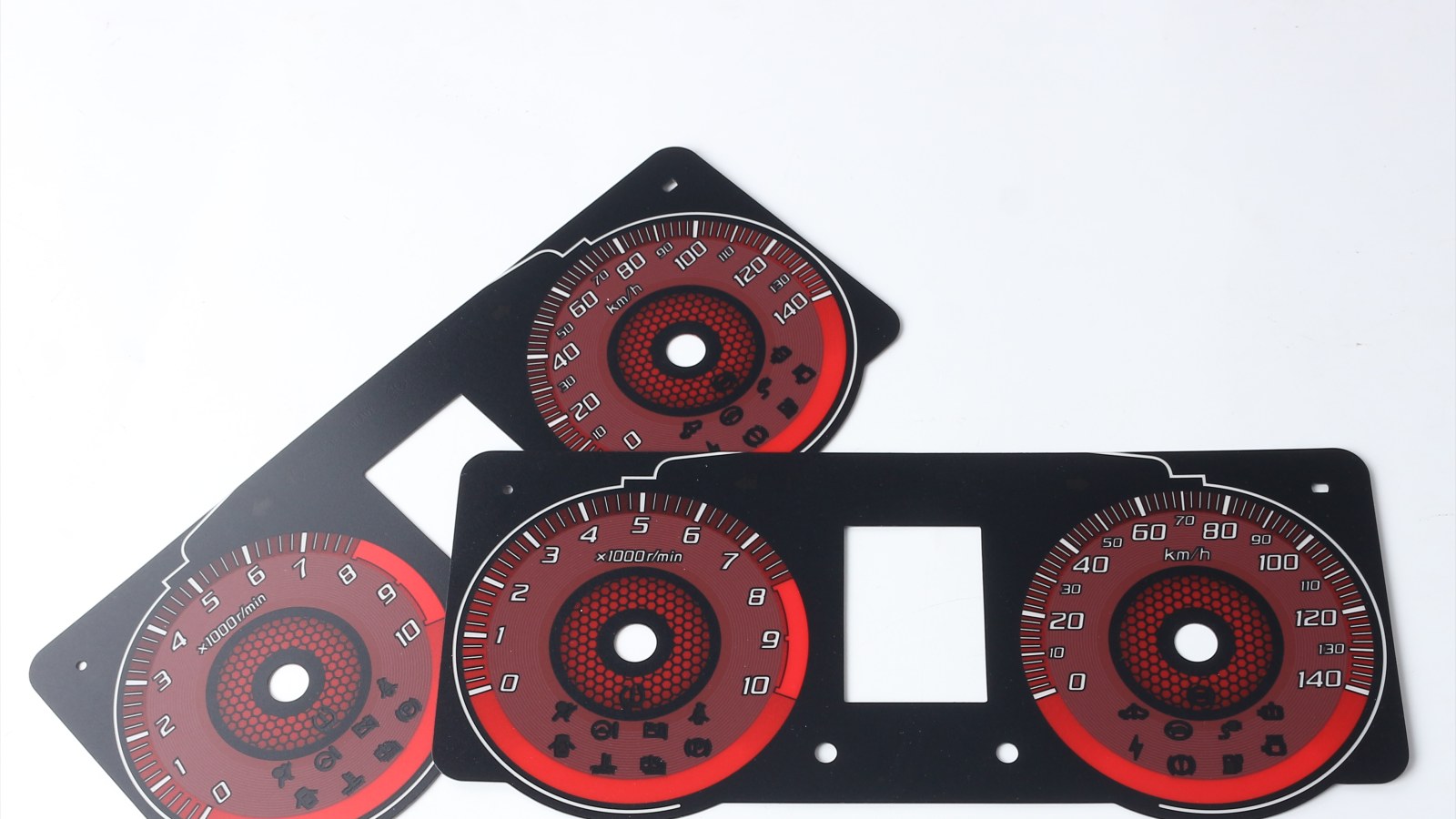
Quick answer: if your outdoor control box uses a graphic overlay on a powder-coated housing, do not approve the sample from color and cutout alignment alone. In summer heat, the more important checks are whether the adhesive holds on the real coating, whether the window and legend stay clear after wipe-downs, whether edge silvering appears after the housing warms up, and whether the overlay still sits flat once the tail, gasket, or enclosure pressure is added. If your project uses a printed front panel without a thick molded keypad, the graphic overlay page is the closest product reference.
Why this buyer question is current
On June 23, 2026, the National Weather Service heat safety page continued pointing buyers and field teams back to heat-risk basics, and the Houston forecast page kept another hot summer pattern in view. That matters for outdoor chargers, service terminals, generator panels, access devices, and utility controls because the front panel is often reviewed indoors while the real unit will sit on a dark housing in direct sun, then get wiped down again during service.
That gap between desk review and field condition is where overlay problems start. A flat panel that looks clean in the sample tray can show lifted corners, cloudy windows, or polished wear spots after the real housing heats up and the operator starts cleaning it.
Why powder-coated housings change the overlay review
A buyer may confirm the overlay material and still miss the surface it has to bond to.
Powder-coated housings are common on outdoor boxes because they are practical and durable. They also change the adhesive review:
- The coating texture reduces the true contact area compared with smooth painted metal or glass.
- Dark housings store heat, which can make edge stress and trapped air show up faster.
- Corner radii, seams, and screw-pressure zones can push the overlay unevenly after assembly.
- A slightly rough coating can make a good-looking bench bond behave differently after a few hot-cool cycles.
This is why a buyer should ask for the overlay to be judged on the real coating or a close panel coupon, not only on release liner photos and artwork approval.
What heat and repeated wipe-downs usually expose first
The first failure is not always a full peel-off.
More common early warning signs are:
- Fine edge silvering where the adhesive loses full contact on the coating peaks.
- Small lifted corners near a cutout, display window, or narrow border.
- A glossy wear patch on a matte anti-glare surface after repeated wiping.
- Window haze or drag marks that make the display area look dirty even when it is clean.
- Legend fading or color shift on frequently cleaned function areas.
If the overlay is paired with a membrane switch or backlit indicator area, heat can also make the finished panel look uneven because the tail route, internal spacer pressure, or support ribs are pushing from below.
Sample checks to run before you freeze the overlay
Do not stop at a loose-part appearance check. Run a short assembled review that copies the real housing condition.
- Bond the overlay to the actual powder-coated panel or a verified coupon with the same coating and texture.
- Leave the bonded sample through a heat-soak cycle, then inspect the edges again after cooldown.
- Wipe the surface with the real field cleaner or alcohol wipe expected in service.
- Check the display window under angled light, not only straight-on indoor light.
- Look at narrow bridges between windows, icons, and panel edges where local lift often starts.
- If the panel includes a tail or rear connection, inspect whether the cable route is pulling one edge after assembly.
- Recheck the surface finish after several wipe cycles so a matte texture does not turn into a shiny patch.
One common mistake is approving the overlay from a flat bench sample, then discovering after pilot assembly that the panel edge nearest the housing seam begins to silver. Another is choosing a nice matte finish that loses its uniform look after repeated wipe-downs.
What buyers should send before asking for a final quote or revised sample
A faster engineering review usually starts with housing evidence, not slogans.
Send:
- Front-panel drawing with overall size, corner radii, cutouts, and border widths.
- A photo of the real housing face or a note identifying the powder-coat texture and color.
- Whether the unit lives in direct sun, partial shade, or covered outdoor service.
- Cleaning method: dry wipe, alcohol wipe, detergent, or another routine.
- Surface target such as matte anti-glare, clear window, textured finish, or fingerprint control.
- Any existing failure photo showing edge lift, cloudy window, or worn legend.
- If the overlay works with a switch layer, tail direction and the nearest support features behind the panel.
If your team is ready for a drawing and sample review, send the package through the Request Quote form so the coating, adhesive contact, window finish, and assembly pressure can be checked together.
Final sample decision
For powder-coated outdoor equipment, a graphic overlay should be approved only after the buyer confirms adhesive contact on the real surface, wipe-down durability, window clarity, and edge stability after heat exposure. That review usually prevents a much more expensive correction after the first field build.
Need help reviewing a structure?
Send your drawing, photos, application, and quantity. Baoshengda can help check the structure before sampling.
Send Drawing for Quote