
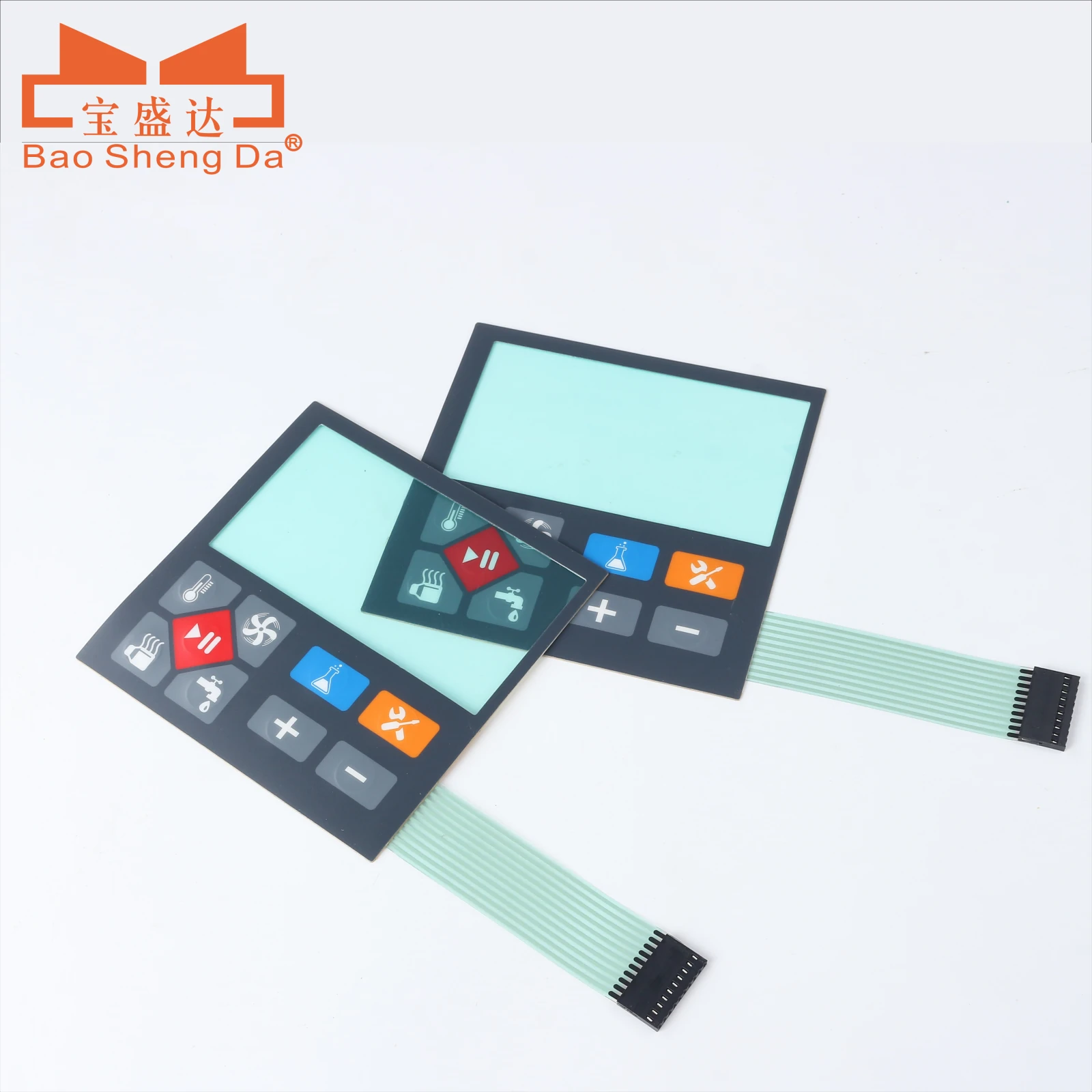
An identical drawing does not create an identical bond. A study published on August 16, 2026 examines adhesive squeeze flow when a substrate carries large roughness patterns. During a graphic overlay supplier transfer, buyers often compare artwork, window positions and outer dimensions, then leave the powder coat, molded texture, wiped surface or old adhesive residue out of the approval. The new sample can lift at an edge or trap air even when the drawing matches. Freeze the mounting-surface specimen before approving the transfer.
What the August 16 adhesive study signals
Parametric analysis of adhesive squeeze flow with large substrate roughness patterns was published on August 16, 2026. The title identifies the two variables that matter in a graphic overlay transfer: how adhesive squeezes under application pressure, and how large roughness patterns on the substrate change that flow.
The study is adhesive mechanics context, not a Baoshengda test. It does not provide an overlay material, adhesive part number, cure method or acceptance limit. The useful warning is narrower: a rough mounting surface does not behave like a smooth reference plate, so the buyer must test the real housing face instead of approving the bond from the drawing alone.
Why a supplier transfer changes the bond even when artwork matches
A revision can preserve every coordinate in the artwork and still change the bond in several ways:
- the housing paint, powder coat or texture supplier changes;
- the mold texture direction or wear condition changes;
- cleaning leaves a different residue or surface energy;
- the old overlay leaves adhesive behind when it is removed;
- the new supplier uses a different adhesive, liner, thickness or cure cycle;
- application pressure is not controlled at the new assembly site.
Each change affects how the adhesive wets the peaks and valleys. The panel outline can remain exactly the same, while the bondline becomes thinner in one area and thicker in another. Edge lift and trapped air are then failures of the assembled system, not failures that show up in a two-dimensional overlay drawing.
Turn roughness into sample evidence
The table below converts transfer signals into physical checks and required evidence. It is a review tool, not a universal pass and fail standard.
| Transfer or revision signal | Bond risk | Required evidence |
|---|---|---|
| Artwork and dimensions match | No proof that the adhesive performs the same | Old and new adhesive part numbers, liner, thickness and cure |
| Substrate coating or texture changed | Adhesive squeeze and wetting change | Representative housing sample with the production texture |
| Powder coat or molded surface is rough | Bondline can become uneven | Mounted sample, edge inspection and agreed bond coverage |
| Old adhesive or residue remains | Surface energy and thickness change | Cleaning and primer process with before and after photos |
| Window or cutout edge is close to the panel border | Stress and ingress concentrate there | Sample with real cutouts and the production bond width |
Do not let one person compare drawings while another person changes the adhesive. The artwork revision, adhesive specification, substrate specimen and assembly process must share one controlled package.
Keep the window and cutouts in the mounted review
The window is not only an optical opening. Around a display window, the overlay has a narrow bond path where stress, cleaning liquid and finger pressure can meet. If the housing texture is rough under that narrow edge, the same squeeze-flow variation can create a weak ring.
Confirm the window outline, datum and active display area before sampling. Then review the bond width around the window, the distance from any cutout to the panel edge, and the intended cleaning method. A graphic overlay and film panel review should include the real housing, not only the flat artwork.
Test the mounted panel, not a smooth reference plate
A clean aluminum or glass plate can prove that the adhesive sticks to one surface. It cannot prove how the adhesive fills the production housing texture or how it survives the real cleaning and operating environment.
The mounted sample should use the actual housing material, coating, texture direction, ribs, bosses and panel landing. Apply the adhesive with the production-intent pressure and cure method, then inspect the edge, window ring and cutout area. Retain the old sample, new sample, substrate photographs and process notes together.
Supplier boundary and limitations
The cited study is original adhesion research. It is not a Baoshengda test, an adhesive certification, a promise of edge-lift performance or evidence that a particular overlay design is safe. Baoshengda can review the overlay artwork, window and cutout geometry, material, adhesive inputs and physical sample evidence for an agreed design. The buyer remains responsible for the housing substrate, cleaning and surface preparation, adhesive selection, assembly process, final product validation and any equipment-level approval.
Do not copy a roughness value from the research paper into the overlay specification. The equipment owner must define the actual surface and the sample acceptance criteria.
Graphic overlay roughness and adhesive RFQ checklist
Send these items before requesting a firm prototype plan:
- old and new housing material, coating, texture and surface photos;
- surface roughness description or measurement if available;
- cleaning agents, primer, residue condition and preparation steps;
- old adhesive or old sample information when available;
- panel drawing with datum, window, cutout and key positions;
- required bond width, edge clearance and assembly pressure;
- operating temperature, cleaning frequency and chemical exposure;
- mounted sample test plan with pass or fail evidence;
- prototype quantity, production estimate and controlled revision numbers.
When the housing surface and adhesive route are documented, send the overlay package to the graphic overlay page and request a quote.
Need help reviewing a structure?
Send your drawing, photos, application, and quantity. Baoshengda can help check the structure before sampling.
Send Drawing for Quote