
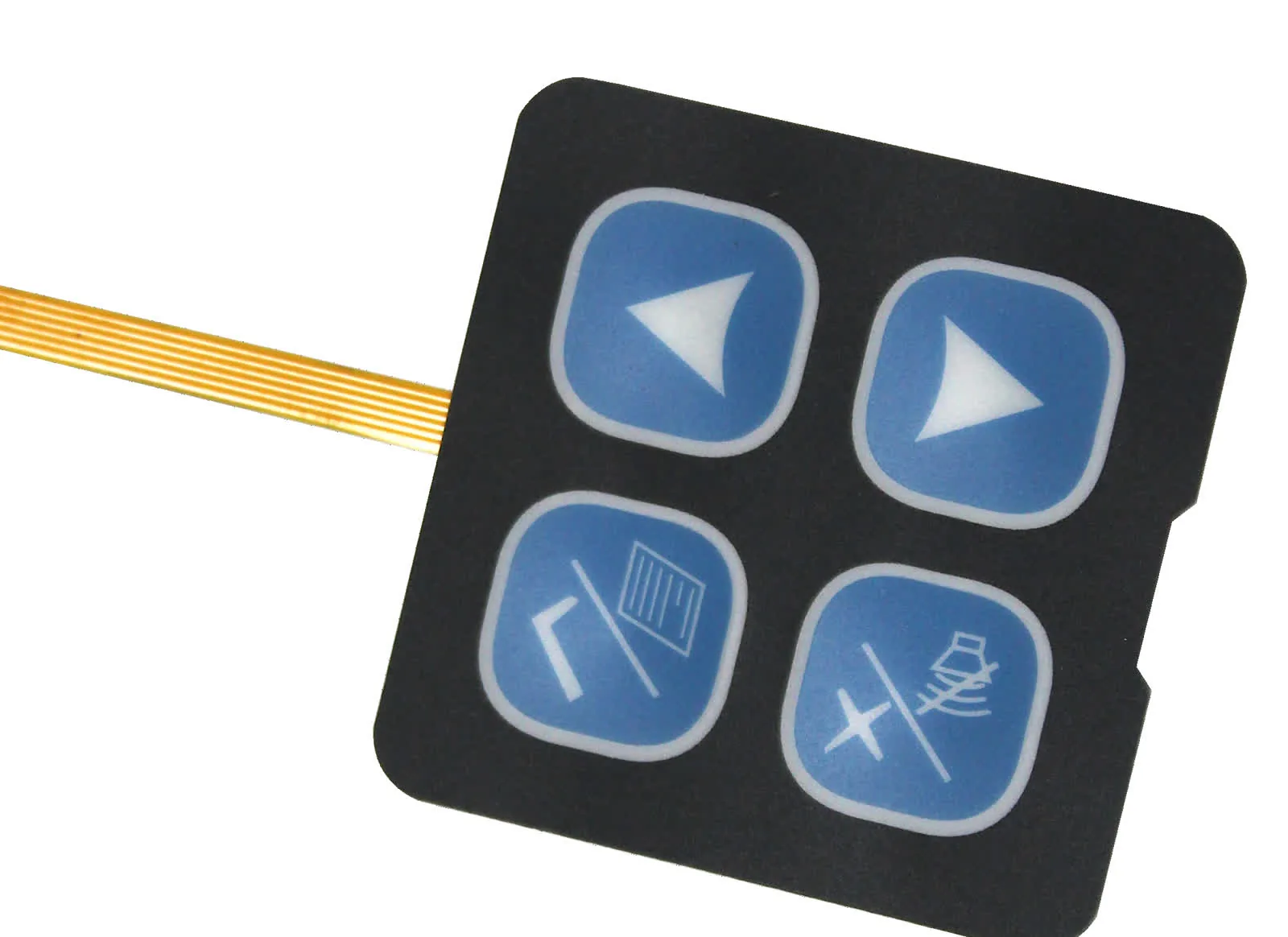
Quick answer: if your outdoor controller uses a compact front panel and a tight PCB layout, do not approve the membrane switch sample by key feel alone. Heat, humidity, enclosure crowding, and tail bending can turn a good bench sample into a field problem. Buyers should confirm the FPC tail path, connector entry, stiffener position, adhesive plan, and assembled test condition before signing off the sample. If the project already needs fine-pitch routing or a controlled tail layout, the FPC membrane switch page is the closest product reference.
Current trend: Gulf-coast heat and storm-season conditions put compact outdoor controls under more stress
As of June 18, 2026, the National Weather Service forecast for Houston showed a Heat Advisory in effect from June 18 until June 19, with heat index values as high as 108 to 109 F. The National Hurricane Center's 2:00 AM EDT Tropical Weather Outlook for June 18 also noted the last advisory on Post-Tropical Cyclone Arthur along the upper Texas coast.
For outdoor electronics buyers, the useful takeaway is not the storm headline itself. It is that compact enclosures now have to deal with hot air, moisture, startup cycling, and service access at the same time. Those conditions often expose tail-routing and connector mistakes faster than indoor bench tests do.
Buyer problem: the keypad works on the table, then the tail starts fighting the enclosure
A compact outdoor controller can look fine during first sample review because the front artwork, tactile feel, and continuity all pass. Trouble starts after the panel is installed into the real housing.
Common failures include:
- The FPC tail needs a sharper bend than the drawing allowed, so stress builds near the exit.
- The stiffener reaches the connector at the wrong angle, making insertion difficult or unstable.
- A foam gasket, rib, or screw boss pushes against the tail after the enclosure is closed.
- Adhesive lift starts at one edge because the panel sits over a warm or textured housing surface.
- Condensation or splash exposure is managed at the front face, but the tail exit area stays under-protected.
- Service access is impossible without pulling the tail or twisting the connector.
That is why FPC membrane switch approval should be treated as an enclosure-fit question, not only as a keypad question.
Check why the project needs FPC before locking the sample
FPC is useful when the project needs tighter routing, a more controlled connector interface, or better handling in a compact assembly. It is not automatically the right answer for every membrane switch.
Confirm these points first:
- Is the PCB connector pitch too fine for the current silver printed tail plan?
- Does the tail need a predictable fold path around ribs, battery packs, or shielding parts?
- Does the housing force the tail to pass through a narrow slot or step-down area?
- Does the project need LED lines, shield-related routing, or extra circuits in a small space?
- Is the switch expected to be serviced or unplugged later?
If the answer to those questions is mostly no, the buyer should still ask whether a simpler circuit structure would be enough. FPC helps when the mechanical and electrical reasons are clear.
Tail bend and connector entry deserve their own review
Many first samples fail here, not on the button area.
Review:
- Tail length with a service loop, not just the straight-line distance to the PCB.
- Contact orientation: contacts up or contacts down.
- Connector pitch, pin count, and latch direction.
- Minimum bend area between the panel exit and the first fixed point.
- Stiffener thickness and whether it interferes with the connector shell.
- Whether the tail crosses a metal edge, hot component, or screw tower during assembly.
A sample can pass continuity and still be wrong if the assembler has to force the tail into place. That kind of stress usually shows up later as intermittent keys or cracked conductors near the bend zone.
Heat, sealing, and adhesive checks should happen together
Outdoor-controller projects often review sealing and tail layout as separate topics. In practice they interact.
Check these together:
- Front-panel sealing target: splash, rain exposure, washdown, or only occasional wipe-down.
- Tail-exit protection and whether the exit path becomes a moisture path inside the housing.
- Housing material and surface texture under the adhesive.
- Whether internal temperature rise softens nearby foam, tape, or support parts.
- Whether the panel sits near a display window, battery, power board, or sun-exposed bezel.
- Whether the adhesive edge stays flat after the enclosure has warmed up.
A front face that looks sealed from the outside can still fail if the tail exit and adhesive edge were not reviewed under real assembly temperature.
Approve the sample in the assembled housing, not as a loose bench part
A useful sample review should include the real enclosure and the real PCB connection whenever possible.
Before approval, ask the team to check:
- Key response after full installation.
- Tail insertion and removal without scraping or twisting.
- Clearance to ribs, screws, foam pads, or shielding cans.
- Visual condition of the adhesive edge after warm soak or outdoor exposure.
- Any change in button response after the tail has been folded and fixed in place.
- Whether the cover can be reopened for service without damaging the tail.
This step catches the quiet failures that do not appear in a flat-table review.
RFQ checklist for an FPC membrane switch used in a compact outdoor controller
For a faster quotation and a more useful first sample, send:
- 2D drawing with panel outline, key layout, tail direction, and connector side.
- Housing photo or section view showing the PCB, ribs, screw bosses, and exit slot.
- Connector part number or at least pitch, pin count, and contact orientation.
- Tail fold note, including the bend direction and any keep-out area.
- Environment note covering sun heat, humidity, splash, cleaning, or condensation risk.
- Adhesive and sealing expectations at the panel edge and tail exit.
- Whether the project needs LED, shield-related routing, or extra circuit lines.
- Sample quantity, annual volume, and target launch timing.
- Failure history from the older design, especially tail cracking, insertion difficulty, adhesive lift, or intermittent keys.
If your team is ready for engineering review, send the package through the Request Quote form so the tail layout, connector fit, and sealing details can be checked together.
Practical takeaway
Current heat and storm-season conditions are a useful reminder that compact outdoor controllers should be approved around real enclosure behavior, not just around front-panel appearance. Buyers usually get a better FPC membrane switch sample when they define the tail path, connector entry, bend zone, and sealing details before the sample is released.
Need help reviewing a structure?
Send your drawing, photos, application, and quantity. Baoshengda can help check the structure before sampling.
Send Drawing for Quote