
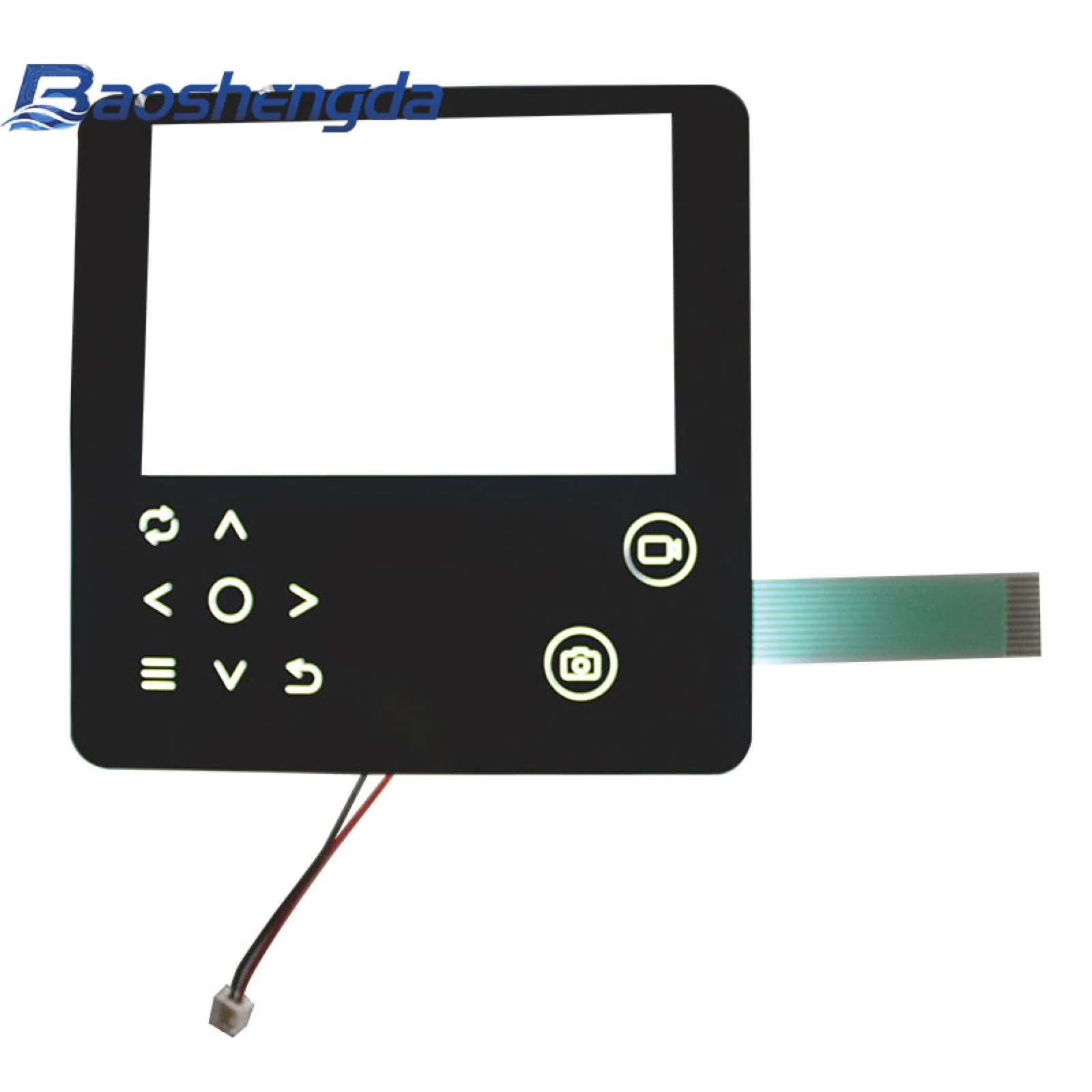
Quick answer: if your equipment will be used outdoors or in semi-outdoor service conditions, a backlit membrane switch should be reviewed for two opposite viewing conditions before sampling: strong daytime glare and low-light operation. The same panel also needs realistic checks for cleaning, adhesive bonding, tail routing, and icon visibility after assembly.
The weather hook this week is straightforward. U.S. heat-monitoring and forecast pages are again highlighting mid-June heat risk and hot conditions across parts of the country. For buyers of outdoor controls, service equipment, charging accessories, test devices, kiosks, and field instruments, the useful takeaway is not the forecast itself. It is the control-panel question behind it: will the HMI stay readable and stable when operators face sun glare by day, backlight demand at night, and repeated wipe-down during the season?
Reference sources for the current heat angle: NOAA Weather Prediction Center hazards outlook and Heat.gov guidance.
Current trend: summer heat makes control-panel readability more practical
Hot weather does not only affect electronics inside the enclosure. It also changes how operators use the front panel.
In bright sun or reflective outdoor light, buyers often discover that a panel which looked clear on the bench becomes harder to read in the field. At night or in shaded service areas, the opposite problem appears: icons may be too dim, uneven, or distracting.
That is why backlit membrane switch projects should be reviewed as user-interface parts, not only as printed overlays with LEDs added later.
Buyer problem: a panel can pass the drawing and still fail in real light
A drawing may confirm the outline, key position, and connector. It does not prove that the final front panel will be easy to use in glare, dusk, or service lighting.
Common field complaints include:
- Icons wash out in direct or angled light.
- Dead-front legends become visible when they should stay hidden.
- Window areas reflect too much under sun.
- Backlight brightness looks uneven across key zones.
- Operators can find the key at night but cannot read the symbol clearly.
- Cleaning and heat accelerate edge lifting near the display window or tail exit.
If the product will be mounted outdoors, near a vehicle, by a machine door, or in a maintenance area with mixed light, these risks should be discussed before the first sample.
Check daytime visibility before you discuss LED quantity
Buyers often begin with LED color, voltage, or brightness. Start earlier: define what the operator must see in daytime without relying on the backlight.
Confirm:
- Which symbols must remain visible in bright daylight.
- Which icons should appear only when illuminated.
- Whether the display window needs anti-glare treatment.
- Whether the surface finish should be matte, textured, or gloss.
- Whether the panel is viewed straight on or from an angle.
- Whether the operator may wear gloves, sunglasses, or face shields.
A dead-front effect can look clean in marketing photos, but it is only useful when the hidden icon logic is still practical in the real product environment.
Then review nighttime or low-light backlight behavior
Once daytime readability is clear, review how the panel should behave in low light. The buyer should not assume that adding more LEDs automatically solves the problem.
Useful questions include:
- Does the project need status indication, key-position finding, or full legend readability?
- Should all keys light evenly, or only selected functions?
- Does the display window sit close enough to the icons to create light leakage?
- Is the light guide, LED spacing, or masking design defined yet?
- Does the product need one brightness level or dimming control?
- Are there camera or sensor functions nearby that could be affected by stray light?
A backlit membrane switch should be sampled in the intended housing, because bezel depth, paint color, and mounting pressure can change the visual result.
Heat, cleaning, and sealing should be reviewed together
Summer use often means more wipe-down, more dust, and more thermal cycling between daytime heat and cooler night conditions. The front panel structure should be reviewed as a full stack.
Check:
- Overlay material and print protection for repeated handling.
- Adhesive match to plastic, coated metal, or painted housing.
- Edge design around the display window.
- Tail exit direction and bend radius if the tail passes near a hot zone.
- Connector and stiffener details if service access is tight.
- Whether splash, humidity, or washdown exposure should be treated as a sealing risk.
If the product uses alcohol wipes, detergent, or routine outdoor cleaning, say that early. The supplier can then quote around the real use case instead of a generic indoor assumption.
Sample review should include real viewing photos, not only electrical pass/fail
For this type of project, an electrical check is necessary but incomplete. A useful sample review should include visual evidence from actual use angles.
Before approval, ask for or record:
- Daylight photos from the main operator angle.
- Low-light photos with the backlight on.
- Close-up images around window edges and icon zones.
- Notes on whether any legend shows through when unlit.
- Basic continuity and LED function results.
- Tail and connector fit after the panel is installed.
This makes later revisions faster, especially when several departments review the sample in different locations.
RFQ checklist for a backlit outdoor control panel project
To get a more accurate quotation and sample plan, send:
- 2D drawing with overall size, key areas, and window dimensions.
- Artwork file showing visible legends and any dead-front areas.
- Product-use note describing indoor, semi-outdoor, or outdoor exposure.
- Day and night readability expectation.
- Surface-finish preference such as matte, textured, or gloss.
- LED color, voltage, and brightness target if known.
- Housing material, mounting photo, and bezel depth.
- Cleaning method, splash risk, and temperature assumptions.
- Tail exit direction, tail length, pin count, and connector data.
- Sample quantity, target timing, and any older panel problems.
If the old panel had poor icon visibility, uneven light, or edge lifting, include photos. Those failure details are usually more useful than a generic request for a better sample.
Practical takeaway
A summer heat trend does not mean every project needs a different switch structure. It does mean outdoor and high-glare control panels should be quoted and sampled around real viewing conditions, not just artwork approval. For backlit membrane switches, clear daytime readability, controlled nighttime illumination, realistic cleaning assumptions, and housing-based sample checks usually matter more than adding more light.
Baoshengda can review artwork, window areas, daylight readability goals, backlight requirements, housing photos, and tail-routing details before quoting a custom backlit membrane switch or front-panel overlay assembly.
Need help reviewing a structure?
Send your drawing, photos, application, and quantity. Baoshengda can help check the structure before sampling.
Send Drawing for Quote