
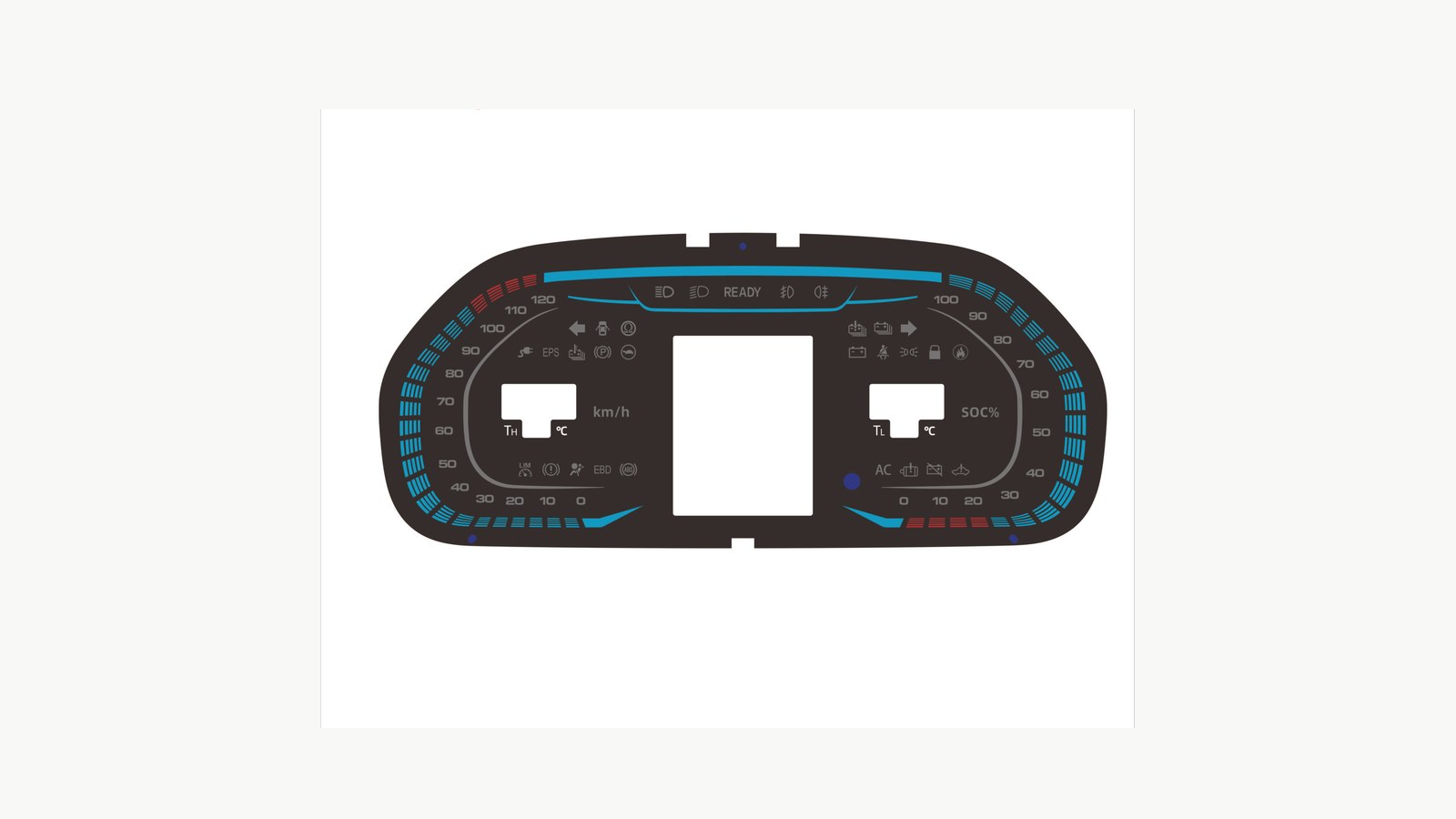
Direct answer: an automotive dashboard overlay sample should be reviewed under the same heat, glare, backlight, window, and mounting conditions that the finished cabin part will face. A flat printed sample can look acceptable on a desk and still create reflection, icon washout, window misalignment, or edge lifting after it is bonded to the real housing.
For automotive dashboard trim, buyers should connect the overlay review with the housing, display opening, warning-symbol artwork, surface finish, and final bonding path. Baoshengda can review PET or PC film, printed windows, adhesive, backlit zones, and assembly risks for an automotive dashboard overlay before the sample is approved.
What should buyers check under heat?
Heat does not only affect color. It can change adhesive contact, film flatness, printed edge appearance, display-window fit, and the way the overlay sits around raised or recessed housing areas.
Check these sample points before approval:
- Place the sample on the actual housing material or a same-finish test plate.
- Review edge lift around curves, cutouts, locating holes, and window corners.
- Confirm whether the adhesive still contacts textured, painted, or coated plastic after heat exposure.
- Look for film curl, whitening near embossed zones, or print distortion around tight openings.
- Check whether display windows stay flat enough for the display, indicator-light, or lens underneath.
A common sample-stage failure is approving the loose overlay, then finding that the mounted part lifts at the edge after cabin heat or shipping storage. The RFQ should include the housing surface and any heat-review method the buyer plans to use.
How should glare and surface finish be reviewed?
Dashboard overlays are viewed from changing angles. A glossy surface may look clean in a product photo but distract the driver or operator under sun load, workshop light, or night illumination.
Use this decision table during sample review:
| Review item | What to check | Buyer decision |
|---|---|---|
| Surface finish | Matte, gloss, texture, hard coat, or anti-glare effect | Choose based on cabin reflection and cleaning needs. |
| Printed contrast | Icon and scale visibility from left, center, and right positions | Confirm day and night readability before mass production. |
| Window clarity | Haze, dust marks, edge burrs, and alignment to display area | Decide acceptable visual standard for sample approval. |
| Fingerprint behavior | Marks after normal touch and wiping | Match the surface to the use environment. |
| Cleaning exposure | Alcohol wipe, mild detergent, dry cloth, or other buyer-defined method | Avoid ink or coating choices that look good only before cleaning. |
There is a tradeoff. A harder or glossier surface can improve scratch resistance and depth, but it may show reflection or fingerprints. A matte texture can reduce glare, but it may soften fine graphics or make windows look less clear if the window design is not separated correctly.
What should be confirmed around windows and backlit zones?
Window and backlight problems often appear only after the overlay is aligned with the display, light guide, indicator area, or molded dashboard housing. The buyer should not review the artwork as a separate decorative film.
Confirm these details before releasing the sample:
- Display-window size, tolerance, corner radius, and visible border.
- Whether the clear or smoked window needs higher optical clarity than the printed area.
- Indicator-light or light-guide position behind each icon or scale area.
- Daytime contrast when the light is off and night visibility when it is on.
- Dead-front areas that should stay hidden until illuminated.
- Whether any icons sit too close to a cutout, screw boss, or curved housing edge.
If a backlit icon is too bright, too weak, or shifted from the light source, the problem may come from ink density, light-guide position, film stack, or assembly tolerance. Fixing it after tooling and artwork approval can delay the whole panel.
What should buyers send for an automotive overlay RFQ?
A useful RFQ package should show how the overlay will be mounted, not only the front artwork.
Send these items when asking for a quotation or sample review:
- Artwork file with visible graphics, cut line, display windows, clear areas, and color reference.
- Housing drawing or photos showing curvature, ribs, screw bosses, display position, and bonding surface.
- Material preference if known, such as PET, PC, PMMA window, matte surface, gloss surface, or hard coating.
- Backlight information, including indicator-light position, light color, dead-front areas, and expected night appearance.
- Heat, UV, cleaning, scratch, and storage conditions the buyer will use for sample approval.
- Quantity, sample count, target lead time, and any packaging protection needed for coated surfaces.
If the project is still at concept stage, include a dashboard housing photo, display-opening size, artwork target, surface-finish preference, and any backlight reference image. For early discussion, send the package through the Request Quote form.
When should the sample be revised before mass production?
Revise the overlay before mass production if any of these signs appear during review:
- The mounted sample lifts near an edge, window, hole, or curved housing area.
- Window alignment is acceptable on the loose film but wrong after bonding.
- Backlit icons are uneven, shifted, or visible when they should be hidden.
- Glare makes fine graphics hard to read from the driver or operator angle.
- Cleaning changes the surface appearance or leaves marks the buyer cannot accept.
- The supplier did not receive the housing surface, display position, or heat-review requirement.
The goal is not to make the sample look good only in a front photo. The goal is to confirm that the mounted dashboard overlay keeps the right appearance, readability, and bond after heat, light, cleaning, and assembly conditions match the real product.
Need help reviewing a structure?
Send your drawing, photos, application, and quantity. Baoshengda can help check the structure before sampling.
Send Drawing for Quote