Overview
An FSR pressure sensor is a thin film component whose resistance changes when force is applied. It can be used in control surfaces, detection pads, device interfaces, smart equipment, medical accessories, instruments, and custom electronic products.
Unlike a simple on-off membrane switch, an FSR sensor gives a variable response. That means the mechanical structure, contact area, force range, circuit design, and calibration method all need review.
What is an FSR pressure sensor?
FSR means force sensitive resistor. The sensor is usually built from flexible film layers with printed conductive and resistive materials. When pressure is applied, the resistance changes. The control electronics can then read a force-related signal.
FSR sensors are useful when the product needs pressure detection instead of only a button press. They are thin, customizable in shape, and can be integrated into compact interface assemblies.
Basic working principle
A typical FSR structure changes resistance as force compresses the sensing area. The signal is not the same as a precision load cell, so the buyer should define whether the application needs simple force detection, relative pressure levels, threshold sensing, or more controlled measurement.
The final behavior depends on sensor size, spacer, material, circuit, actuator shape, housing pressure, and electronic reading method. Prototype testing is important.
Film structure
- Flexible film substrate with printed conductive and resistive layers.
- Spacer or separation layer depending on sensor structure.
- Custom sensing area shape and active force zone.
- Tail and connector designed for the equipment PCB.
- Optional overlay, adhesive, or integration with an HMI panel.
Custom size and shape
FSR pressure sensors can be designed in custom shapes based on the mechanical space and sensing target. The active area, tail exit, adhesive area, and connector route should be shown in the drawing.
If the sensor sits under a button, rubber part, foam, plastic actuator, or metal cover, send the stack information. The mechanical contact shape can strongly affect response.
Resistance range considerations
The resistance response should be discussed as a practical design target, not treated as a fixed catalog value. Buyers should describe the expected force range, trigger threshold, electronics, and whether the product reads rough levels or needs repeatable calibration.
If you have an old sensor sample, send measured behavior, failure symptoms, and photos. If not, start with application force and mechanical structure so prototypes can be reviewed.
Connector options
- Flexible tail with printed contacts.
- FPC tail where connector reliability or compact routing is important.
- ZIF, LIF, pin connector, solder pad, or customer-specified connector.
- Tail stiffener for stable connector insertion.
- Custom pinout based on the PCB and reading circuit.
Applications
- Thin force sensing pads for electronic products.
- Medical or rehabilitation device accessories where pressure input is needed.
- Industrial or instrument interfaces requiring pressure detection.
- Smart equipment, home appliances, and compact HMI products.
- Prototype development where a custom sensing shape is required.
FSR vs membrane switch
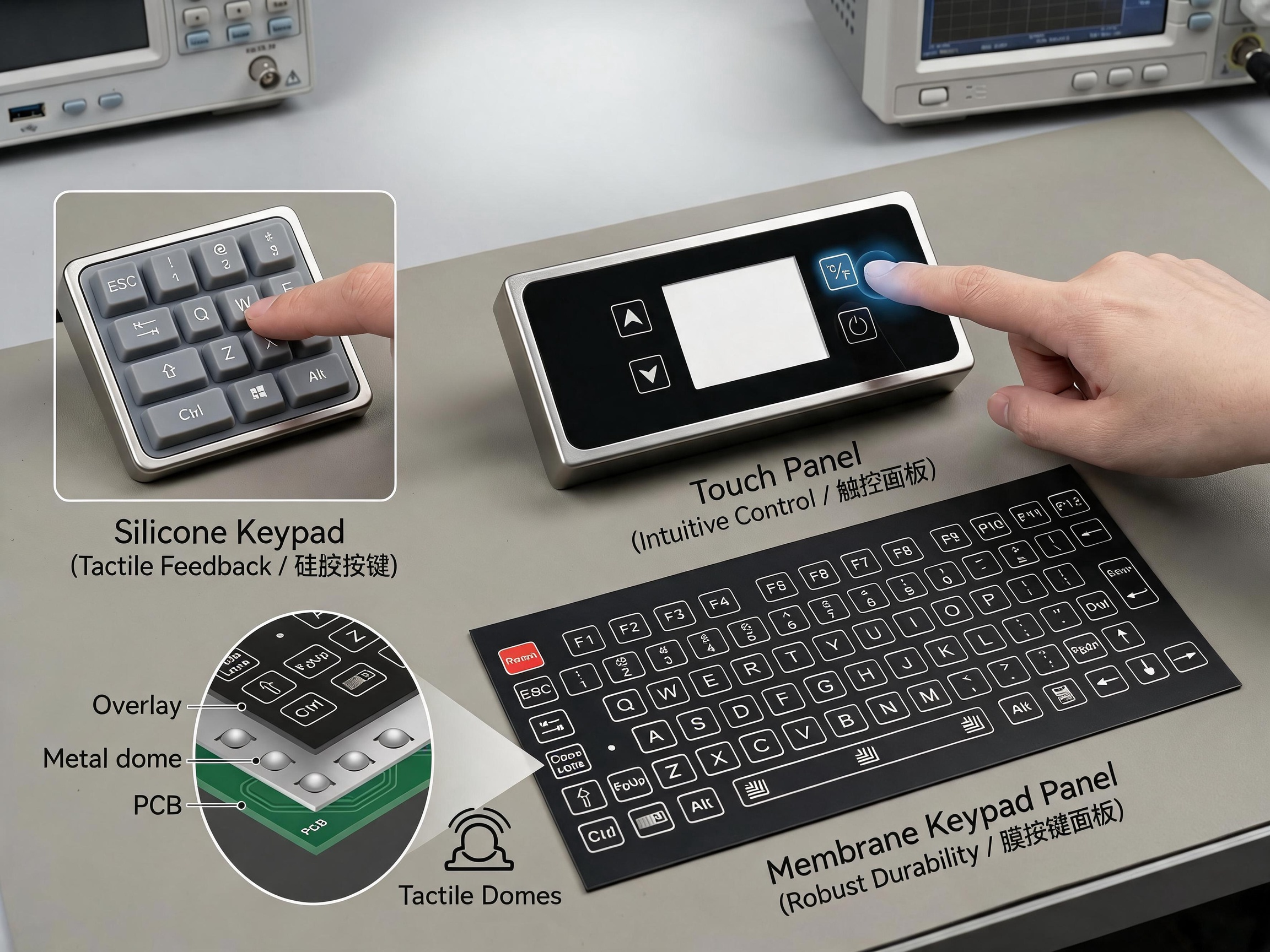
A membrane switch is usually an on-off interface: the key is open or closed. An FSR pressure sensor provides a variable resistance response related to force. The right choice depends on whether the product needs a simple switch signal or pressure-related input.
Some products may use both: a graphic overlay or membrane switch for user controls and an FSR layer for force detection. The stack must be reviewed carefully if both functions are integrated.
Prototype and sample process
FSR projects should go through prototype review because the sensor response depends on the mechanical structure and electronics. A drawing alone may not fully predict behavior. Samples can help confirm force range, contact area, connector route, adhesive, and response consistency.
Share expected prototype quantity, test method, and target production volume so the factory can propose a practical first build.
What to send for quotation
A clear quotation starts with ordinary project facts. If some files are not available yet, send what you have and mark the missing items as open for review.
- 2D drawing with size, outline, button positions, window areas, and tail exit.
- 3D file or housing photos if available.
- Sample photos or an old part if the project is a replacement.
- Application environment, including indoor, outdoor, cleaning, moisture, oil, or heat exposure.
- Prototype quantity and expected production quantity.
- Material requirement, surface finish, color reference, and artwork files.
- Connector requirement, tail direction, pin count, and mating board details.
- Waterproof, backlight, LED, FPC, adhesive, or special reliability requirements.
- Target lead time for samples and mass production.
Related resources
FAQ
What is an FSR pressure sensor used for?
It is used when a product needs thin force or pressure-related input rather than a simple on-off switch signal.
Can the size and shape be customized?
Yes. The sensing area, tail, connector, adhesive area, and outline can be reviewed based on the product structure.
Is an FSR the same as a membrane switch?
No. A membrane switch is usually on-off, while an FSR changes resistance with applied force. Some products can use both structures.
What information do you need for quotation?
Send drawings, active sensing area, expected force range, mechanical stack, connector requirement, sample photos, quantity, and target lead time.
Can you support prototype samples?
Yes. Prototypes are important because FSR behavior depends on force, actuator, housing, adhesive, and electronics.
Can an FSR use an FPC tail?
Yes. FPC tails can be considered when routing, connector fit, or reliability requirements need it.
Can you guarantee a fixed resistance value?
The response depends on the full mechanical and electrical system. Target behavior can be discussed and tested through samples, but unsupported precision claims should not be assumed.