
Before approving a membrane switch life test, agree what the counter records, how the keypad is supported and which electrical and mechanical checks determine the result. A completed cycle target describes exposure to repeated pressing. It needs identified samples, recorded conditions and acceptance criteria before it can support a purchasing decision.
For a replacement keypad, first check whether the proposed part will work in your existing equipment. A count on a test-machine display cannot answer that by itself. Ask how the test connects the actuator, the switch contacts and the intended installation.
The apparatus described in CN220625724U
Baoshengda's Chinese utility-model publication CN220625724U, published on 19 March 2024, describes an automatic apparatus for testing push-button switch life. The document identifies Shenzhen Baoshengda Technology Co., Ltd. as the patent holder. Its claims describe a pneumatic clamping arrangement and pressing columns with buffer blocks and springs. The description also explains an infrared counting arrangement. Read the original Chinese patent publication.
The clamp, pressing columns and counter give buyers specific mechanisms to examine. It does not provide a life-test result for your keypad, establish a cycle rating for all Baoshengda products or confirm that this apparatus is the equipment used for your order. Those points require separate project evidence. The publication is a historical source. This article does not verify the patent's current legal status.
Is the counter recording movement or electrical closure?
In description paragraph [0024], the patent explains that a moving plate interrupts an infrared beam and the counter registers the movement. That described counting path tracks the mechanism. It does not, by itself, document an electrical contact measurement on each press.
For your sample, ask which record the supplier will produce:
- Actuator cycles, with a functional check only before and after the run.
- Actuator cycles, with electrical measurements at agreed intervals.
- Recorded electrical closures throughout the run, using defined measurement and acceptance rules.
Agree the monitoring scope before testing and identify any intervals that will not be monitored. A machine can finish its programmed movements without the counter alone telling you whether a particular key closed correctly throughout the run.
ASTM's public description of F1578-24, contact-closure cycling of a membrane switch, separates repeated cycling from measurements used to assess its effects. Referencing that method does not establish a result for a particular part. If your specification names it, agree the edition, procedure and any deviations with the testing organization. This article is not a substitute for the full standard or a claim of Baoshengda compliance.
Agree the setup before comparing two reports
Use the following as a purchasing review checklist, not a completed test specification. The supplier and your engineering team still need to choose values and acceptance limits for the actual construction.
| Record to agree | What the buyer needs to know |
|---|---|
| Sample identity | Part number, drawing and artwork revision, construction and individual sample IDs. A result from a different stack is not automatically transferable. |
| Key positions | Which keys are pressed, which contacts they operate and why those positions were selected. Link the key map to the electrical pinout. |
| Mounting and support | Whether the switch is loose, bonded to a reference plate or installed in a representative housing. Record the adhesive and support arrangement. |
| Pressing conditions | Probe shape, contact position, applied force or travel control, press rate, hold time and release. State how these are set and checked. |
| Electrical measurement | Measurement points, electrical loading if used, closure criteria and whether measurements are continuous or sampled. |
| Exposure and stopping rule | Cycle target, environment, interruptions and conditions that stop the run. Keep an incomplete run distinct from a completed target. |
| Acceptance record | The checks made before, during and after cycling, their limits and the actual results for each identified sample. |
The patent's clamp and buffered pressing arrangement make two of these questions concrete: how is the specimen held, and how does the pressing mechanism contact it? The answer for a finished membrane keypad must fit that keypad's construction. A general-purpose clamp should not be assumed to reproduce the support supplied by the equipment housing.
For positional force checks before cycling, use the separate guide to mapping key positions across membrane-switch samples. That initial comparison and the cycling record answer different questions.
Read the result at the level it actually supports
If a report says that the target was reached and a final contact check passed, first ask what was observed during the run. A final check alone cannot establish the absence of intermittent failures between measurements. Keep the measurement scope visible rather than describing an unmonitored interval as a continuous pass.
Keep individual samples and keys identifiable. Do not turn the sum of their actuator counts into a life rating for every key or every delivered part. If a run stops early, retain the stopping count, reason and available measurements. If a sample is removed and remounted, record that change as well.
A replacement part also needs an installed review. Confirm that the keys operate with the intended housing support, the tail reaches the connector without strain and the electrical functions match the agreed pinout. The equipment maker remains responsible for deciding whether the component evidence is sufficient for the complete device.
What Baoshengda can review for your project
Our custom membrane-switch service covers drawing-specific keypad construction, including the overlay, circuit, key structure, tail and mounting details. The product page lists key-life and continuity checks among project test options. Confirm the available method, equipment, sample quantity and report scope for your part before placing the test order.
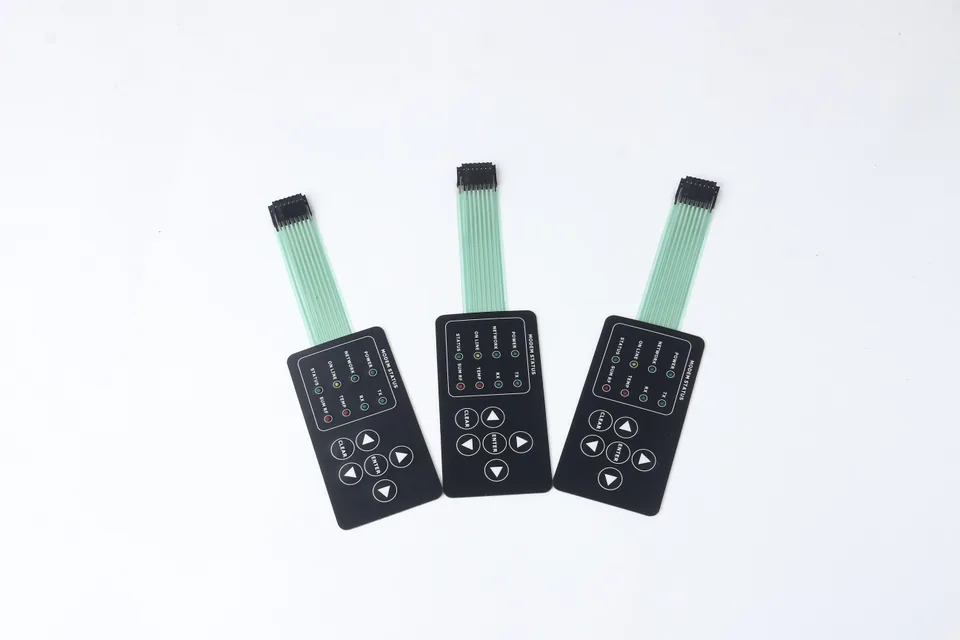
For a claim about your part, ask for its sample IDs and agreed test record. The patent describes an apparatus. The product page describes manufacturing options. Neither the product photograph nor the patent document establishes an achieved cycle count.
Send the information you already have
To start a replacement or new-keypad discussion, send front and rear photos or the available drawing, the equipment application and an approximate sample quantity. Identify the frequently used keys and explain any known failure, such as a missed input or a key that no longer returns normally. You do not need a complete production drawing to make the first inquiry.
If life testing is required, add the intended use, any existing test requirement and the evidence your engineering team needs to approve the sample. Ask us to separate sample and tooling costs from any agreed test work. Use the membrane-switch quotation checklist to organize the available details, then request a keypad and test-scope review.
Need help reviewing a structure?
Send your drawing, photos, application, and quantity. Baoshengda can help check the structure before sampling.
Send Drawing for Quote